What Is the Best Weaving Technology in 2026?
Choosing the best weaving technology in 2026 is not a race for the fastest loom. It is a decision about fabric quality, order size, yarn type, energy use, and the cost of every stoppage. A machine that excels at lightweight apparel may be the wrong choice for dense technical cloth. Small details matter: a broken end, a noisy shed, or a beam change can disrupt an entire shift.
The International Textile Manufacturers Federation’s 2023 International Textile Machinery Shipment Statistics reported about 82,000 shipments of new shuttleless looms in 2022, up 27% from the previous year. Air-jet, rapier, and water-jet systems serve different production needs; shipment figures show investment, not which loom performs best in every mill. That distinction matters. Textile researcher Thomas Gries of RWTH Aachen’s Institute for Textile Technology studies textile production and process engineering. A useful principle drawn from that work is to match the production process to the textile’s end use, rather than optimize speed alone.
This guide compares air-jet, rapier, water-jet, and projectile weaving across productivity, fabric range, operating demands, and practical flexibility. It also considers automation and data monitoring, where sensors can reveal recurring faults before they become costly. No single technology wins every category. And the answer may be less tidy than buyers hope: real performance depends on yarn, maintenance, operator skill, and the mill’s product mix. Use the comparisons as a starting point, then test shortlisted machines with your own materials and specifications.
What Weaving Technology Means in 2026
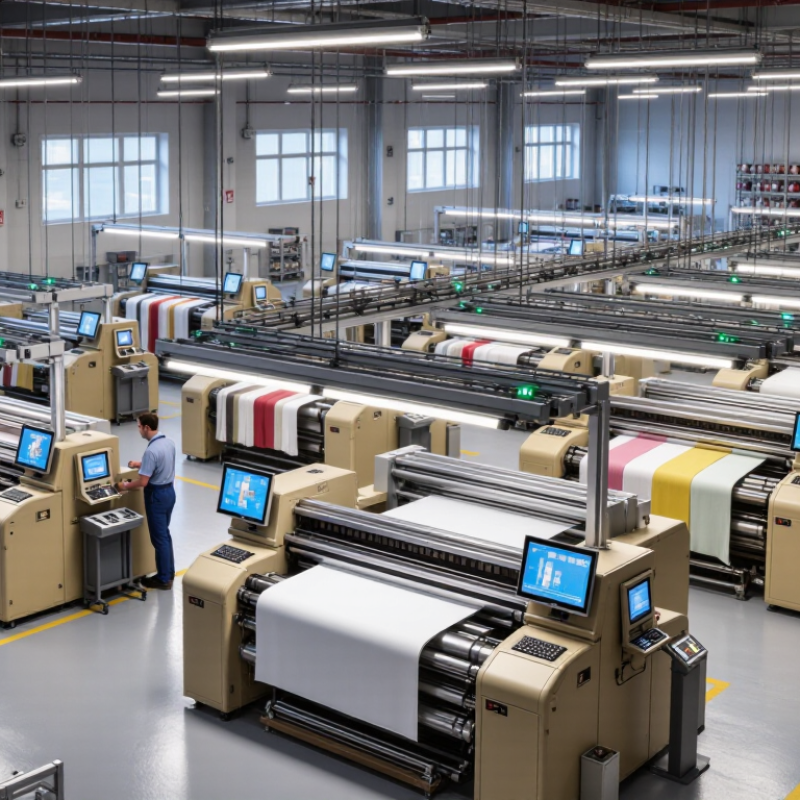
In 2026, weaving technology is not simply a loom’s speed or picks per minute. It is the connected process that turns yarn into stable cloth while controlling waste, downtime, and quality. Textile Exchange’s Materials Market Report 2024 estimates that global fiber production reached 124 million tonnes in 2023 and could rise to 160 million tonnes by 2030. That scale matters. Small efficiency gains can affect large volumes, but only when fabric specifications stay consistent. On a mill floor, this means monitoring warp tension, broken ends, energy use, and defects—not just a bright control screen.
UNEP’s 2023 global roadmap estimates that the textile value chain contributes roughly 2–8% of global greenhouse-gas emissions, making energy and material use relevant technology measures. A practical setup may combine electronic let-off, real-time loom data, and inspection cameras. Linking defects to a beam, yarn lot, and machine setting helps teams repeat good runs and diagnose bad ones. Still, automation is not proof of progress. Sensor readings can be noisy, and retrofit systems may miss edge defects an experienced operator spots by eye. I would treat that as an unresolved gap, not a sales claim. In 2026, capable weaving technology means measurable control, repairable equipment, and operators who can question the dashboard.
How Major Weaving Systems Produce Fabric
A loom turns yarn into cloth by opening a gap in the lengthwise warp, inserting a crosswise weft, then beating it into place. The insertion method shapes speed, fabric range, and operating demands.
Air-jet looms use compressed air to carry weft across the shed; they suit many lightweight fabrics, but air use can be substantial. Water-jet looms propel yarn with water, often for synthetic filament fabrics. Rapier looms carry yarn mechanically, offering flexibility with varied yarns and patterns. Projectile systems grip and pull the weft across, making them useful for heavier constructions. The details matter.
The International Textile Manufacturers Federation’s 2023 International Textile Machinery Shipment Statistics recorded about 88,000 new shuttleless looms shipped worldwide. That figure measures equipment shipments, not output or fabric quality, so it cannot name one universal winner.
In a mill, the practical choice shows up in details: compressed-air noise, damp yarn near a water-jet machine, or the careful tension setting needed to prevent broken warp ends. A narrow, delicate fabric may reward precise control; a high-volume filament line may favor fast insertion.
No system wins everywhere.
I would still hesitate to call speed the deciding measure: setup time, energy use, operator skill, and rejected cloth can change the economics. A loom’s real performance is visible in the roll, not just its rated picks per minute.
Which Criteria Matter When Comparing Weaving Technologies
What Is the Best Weaving Technology in 2026?
Which Criteria Matter When Comparing Weaving Technologies
The best weaving technology depends on the fabric, yarn, and production target—not headline speed alone. Air-jet, rapier, projectile, and water-jet looms handle different materials and fabric widths. Compare realistic output using the same yarn and fabric specification. A fast loom can still disappoint if frequent style changes slow the line.
Start with fabric quality and flexibility. Check width, density, pattern complexity, and the range of yarns each machine can process. Then measure usable output, not just rated speed: include stoppages, broken ends, setup time, and operator workload. Energy and maintenance costs matter too. A quieter machine is not automatically a more productive one. Small details count.
Scale matters. Textile Exchange’s Materials Market Report 2024 estimates that global fiber production reached 124 million tonnes in 2023. That figure signals a large, varied supply chain, not a single ideal loom. Ask suppliers for trial data on your own yarns, including defect rates, energy use per metre, and changeover time. Keep the test conditions documented.
The awkward truth: factory results may not match a controlled demonstration, so leave room for repeat testing before investing.
How Weaving Technologies Perform Across Different Applications
The best weaving technology depends on the fabric, yarn, and production target. Textile Exchange’s Materials Market Report 2024 estimates that global fiber production reached 124 million tonnes in 2023, with polyester accounting for 57%. That scale makes filament-fabric applications important, but it does not make one loom type universally superior.
Air-jet looms suit many lightweight and medium-weight fabrics when output matters. Water-jet looms can be effective with hydrophobic synthetic filaments, but they are a poor fit for absorbent yarns. Rapier systems handle a wider range of yarns and patterns, including delicate or textured materials. Projectile looms can serve heavy fabrics, where stable insertion matters more than maximum speed. These are practical tendencies, not guarantees.
Look beyond loom speed. Check fabric width, yarn breakage, energy use, maintenance skill, and the cost of rejected cloth. ITMF’s International Textile Machinery Shipment Statistics tracks loom shipments by technology, but shipment figures describe investment, not fabric quality or mill-level efficiency. A useful trial compares the same yarn and weave across candidate machines, then inspects edge formation and defects after finishing. The awkward part: a faster loom can still lose money if setup changes consume the shift.
What Is the Best Weaving Technology in 2026? – How Weaving Technologies Perform Across Different Applications
| Technology | Weft Insertion Method | Typical Material Suitability | Common Applications | Key Strengths | Main Limitations | Best Fit When… |
|---|---|---|---|---|---|---|
| Shuttle | A shuttle carries the weft yarn across the shed. | A broad range of yarns, including cotton and heavier yarns; suitable for fabrics where a conventional woven selvage is useful. | Traditional fabrics, specialty cloth, and some narrow or heavy woven products. | Can form a firm selvage without separately cutting and tucking each weft pick; handles varied yarn types. | The moving shuttle creates more mass and mechanical action, generally limiting production speed and increasing maintenance needs compared with modern shuttleless looms. | A traditional selvage or a particular legacy fabric construction matters more than maximum output. |
| Rapier | One or two rigid or flexible rapiers carry or transfer the weft across the shed. | A wide variety of fibers and yarn forms, including delicate, textured, and fancy yarns. | Fashion fabrics, upholstery, jacquard designs, and mixed-yarn or specialty fabrics. | Versatile yarn handling and fabric flexibility; does not depend on a jet of air or water to carry the weft. | Typically less suited than jet looms to the highest-volume production of compatible, consistent yarns; selvage formation may require trimming or tuck-in mechanisms. | The product range includes varied yarns, patterns, or fabric constructions and flexibility is a priority. |
| Air-jet | A jet of compressed air propels the weft; relay jets may assist across wider fabric widths. | Generally best with yarns that are sufficiently uniform and can be reliably transported by air, including many spun and filament yarns. | High-volume production of apparel and home-textile fabrics, such as sheeting and shirting, when the yarn and fabric are compatible. | High production potential for suitable products; no water bath is needed for weft insertion. | Compressed-air use can make energy consumption significant; bulky, highly textured, or irregular yarns may be difficult to insert consistently. | A compatible fabric is made in long runs and production throughput is a major priority. |
| Water-jet | A fine water jet carries the weft through the shed. | Primarily hydrophobic synthetic filament yarns, such as polyester and nylon; yarn and finish must suit wet processing. | Lightweight synthetic fabrics, including some linings and fabrics used in apparel or household products. | Can provide high production potential for compatible synthetic fabrics, with water carrying the weft across the shed. | Not suitable for absorbent yarns; requires water handling and often drying, treatment, or recycling systems. Corrosion and wastewater management must be considered. | The product is made from suitable hydrophobic filaments and the mill can manage water use and treatment. |
| Projectile | A gripper projectile carries the weft across the shed and is returned for reuse. | Suitable for a range of yarns and heavier constructions; machine setup and yarn properties determine the practical limits. | Wide or heavy fabrics, including technical textiles, industrial cloth, and some furnishing fabrics. | Positive weft gripping and suitability for demanding fabric constructions and wider widths. | More complex mechanical handling than many jet systems; generally selected for fabric capability rather than the highest speed on lightweight commodity fabrics. | Fabric width, weight, or construction makes other insertion methods less suitable. |
Selection note: There is no single best weaving technology for every application. Actual output, fabric width, energy and water use, and yarn compatibility vary by machine configuration, operating conditions, and product specification.
How to Choose the Best Weaving Technology for a Specific Need
Choosing the best weaving technology starts with the fabric, not a machine’s advertised speed.
Record the fiber, yarn count, target width, pattern complexity, and expected monthly output. A rapier loom can accommodate a broad range of yarns and intricate designs, which may suit sampling or varied orders. Air-jet looms can be productive for suitable fabrics, but compressed-air use and yarn behavior affect operating costs.
A quoted speed is easy to admire, yet it rarely describes a full shift. That trade-off matters.
Water-jet weaving may work well with suitable synthetic yarns, but moisture handling and wastewater needs add process requirements. Shuttle looms can make sense when their fabric edge or an existing setup fits the job, though they may run more slowly and noisily.
Before investing, weave a trial using the intended yarn and fabric construction. Track usable output, defects, energy consumption, setup time, and maintenance—not just peak speed.
Inspect the cloth under consistent lighting; small flaws can disappear in a rushed check. Real results can be humbling.
Keep room to revise your assumptions, especially when a trial uses only one yarn lot or one shift.
Related Posts
-
Top 10 Textile Weaving Manufacturers for Global Buyers
-
Top Types of Fabric Weaving Machines for Global Buyers
-
What Is the Best Textile Weaving Machine in China?
-
What Is Textile Weaving and How Does It Work?
-
How to Find Top Cloth Weaving Manufacturers in China?
-

Top 10 Best Fabrics for a Sustainable Fabric World?