

Top Types of Fabric Weaving Machines for Global Buyers
Choosing the right fabric weaving machine is a practical decision, not a showroom exercise. Global buyers must compare fabric width, production speed, yarn behavior, energy use, and maintenance support. Air-jet, rapier, water-jet, and projectile looms each solve different production problems. A machine that performs beautifully with polyester may struggle with delicate cotton or technical yarns.
The International Textile Machinery Federation’s International Textile Machinery Shipment Statistics report tracks worldwide deliveries of shuttleless looms and shows continued investment across major textile-producing regions. Its findings also reflect market volatility, so buyers should avoid treating shipment growth as guaranteed demand. Textile Exchange’s Materials Market Report 2024 recorded polyester at approximately 57% of global fiber production in 2023. That material reality matters because yarn type strongly influences loom selection, abrasion control, and fabric quality. The report does not answer every machine question.
Textile engineering authority Dr. S. K. Batra offers a useful principle: “Machine selection must follow fabric requirements, not the other way around.” This idea guides the comparison ahead. We will examine machine structures, suitable fabrics, operating strengths, limitations, and buyer risks. Some figures may change as manufacturers improve automation and reduce energy consumption. That is worth remembering. A low purchase price can become expensive when spare parts arrive slowly, operators need extensive retraining, or fabric defects increase. Real-world experience matters. The best fabric weaving machine is rarely the fastest model alone. It is the machine that consistently matches the buyer’s yarns, order volumes, workforce, and long-term production goals.
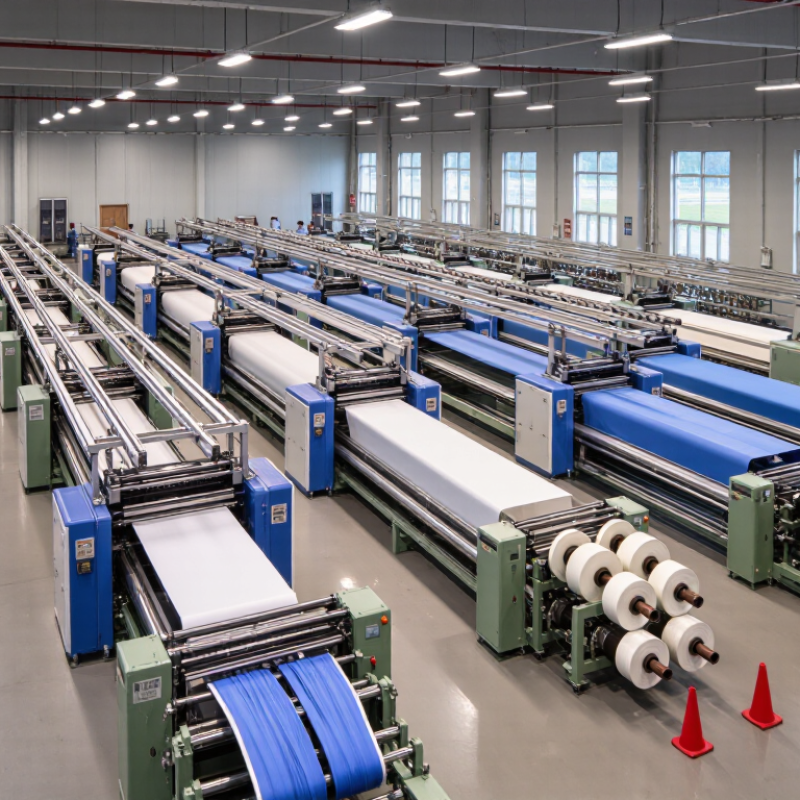
Understanding the Role of Fabric Weaving Machines
Fabric weaving machines are the production core of modern textile mills. They interlace warp and weft yarns into controlled fabric structures. Their role affects fabric strength, width, texture, output, and production stability. Small changes in tension can create visible lines across a finished roll. Details matter.
Rapier looms handle many yarn types and suit flexible, medium-speed production. Air-jet looms can produce lightweight fabrics quickly, but they require consistent compressed air and clean yarn. Water-jet looms work well with certain synthetic fibers, although moisture management becomes important. Projectile looms offer strong insertion performance for heavier fabrics. Each type solves a different production problem. The best choice depends on fiber content, fabric density, width, order size, and factory conditions.
Global buyers should examine more than the machine’s advertised speed. Ask for sample fabric, power consumption data, maintenance intervals, and operator training details. Check whether the control system supports accurate tension adjustment. Production teams often discover that a cheaper machine creates higher costs through waste, downtime, or difficult repairs. No specification sheet reveals every weakness. A supervised trial using the buyer’s actual yarn can expose problems early. That step is easy to skip. Reviewing safety documentation and regional electrical requirements also supports dependable installation and long-term operation.
Top Types of Fabric Weaving Machines for Global Buyers - Understanding the Role of Fabric Weaving Machines
| Machine Type | Weft Insertion Method | Typical Working Width | Indicative Speed Range* | Best-Suited Fabrics | Main Advantages | Key Considerations | Common Applications |
|---|---|---|---|---|---|---|---|
| Rapier Loom | A flexible rapier carries the weft yarn across the shed. | Usually about 1.5–4.0 m, with wider configurations available. | Approximately 400–800 picks per minute, depending on fabric and width. | Cotton, wool, linen, viscose, blended, textured, and technical fabrics. | Highly versatile; handles a broad range of yarn counts, colors, and fabric constructions. | Generally slower than air-jet and water-jet looms; more mechanical parts require maintenance. | Apparel, home textiles, upholstery, furnishing fabrics, and specialty textiles. |
| Air-Jet Loom | A high-speed air stream propels the weft yarn through the shed. | Commonly about 1.5–3.6 m. | Approximately 600–1,200 picks per minute under suitable conditions. | Light to medium-weight cotton, polyester, blends, and synthetic filament fabrics. | Very high productivity, low moving mass, and efficient production of standard-width fabrics. | Requires compressed air; yarn hairiness, moisture, and fabric width affect performance. | Shirting, sheeting, uniform fabrics, lining, and other high-volume woven goods. |
| Water-Jet Loom | A fine, high-pressure water jet carries the weft yarn. | Usually about 1.5–2.3 m. | Approximately 600–1,200 picks per minute for suitable filament yarns. | Hydrophobic synthetic filaments such as polyester and nylon. | High speed, relatively low insertion resistance, and smooth fabric surfaces. | Not suitable for moisture-sensitive fibers; requires water treatment, drying, and wastewater management. | Taffeta, lining, sportswear fabrics, filament fabrics, and lightweight synthetic textiles. |
| Projectile Loom | A small projectile transports the weft yarn across the shed. | Often about 1.9–5.4 m, including wide-width configurations. | Approximately 250–600 picks per minute, depending on fabric construction. | Heavy, dense, wide, abrasive, and technical fabrics. | Suitable for heavy yarns, wide fabrics, and difficult-to-weave constructions. | Lower production speed and higher mechanical complexity than many modern high-speed looms. | Denim, canvas, carpets, industrial fabrics, tire cord, and wide-width textiles. |
| Shuttle Loom | A shuttle carries a bobbin of weft yarn back and forth through the shed. | Commonly about 0.9–2.3 m. | Typically about 100–250 picks per minute. | Heavy cotton, wool, traditional fabrics, narrow fabrics, and fabric requiring selvedges. | Produces firm edges and can accommodate robust yarns with relatively simple technology. | Lower speed, higher noise, more vibration, and greater operator-safety requirements. | Traditional textiles, heavy-duty cloth, narrow fabrics, and small-scale production. |
| Needle Loom | A needle inserts one or more weft yarns, usually for narrow woven products. | Typically narrow widths from a few millimeters to about 0.3 m. | Speed is application-dependent and commonly specified in insertion cycles per minute. | Webbing, elastic tapes, labels, ribbons, and narrow technical fabrics. | Efficient for narrow fabrics and supports multiple tapes or patterns in one setup. | Limited to narrow products; machine selection depends strongly on tape structure and yarn type. | Seat belts, bag straps, elastic bands, hook-and-loop tape, labels, and industrial webbing. |
*Speed figures are indicative industry ranges rather than guaranteed operating values. Actual performance depends on yarn material, yarn count, fabric density, reed width, weave pattern, machine configuration, and finishing requirements.
Related Posts
-

What Is the Best Textile Weaving Machine in China?
-
How to Find Top Cloth Weaving Manufacturers in China?
-
Top 10 Textile Weaving Manufacturers for Global Buyers
-
What Is Textile Weaving and How Does It Work?
-
2026 Top Weaving Machine Innovations and Trends to Watch?
-
How to Choose the Right Weaving Machine for Your Textile Projects?