Top Textile Machinery Manufacturers Worldwide?

Choosing a global textile machinery manufacturer is rarely a simple comparison of brand names. A reliable machine must match fiber type, production volume, fabric structure, energy goals, and local service capacity. In modern mills, equipment can shape yarn quality, weaving stability, dyeing consistency, and delivery schedules. Small details matter. A vibrating spindle, uneven roller, or delayed spare part can affect an entire order. This guide introduces leading manufacturers through practical industry criteria, not publicity alone.

The companies discussed represent established strengths across spinning, weaving, knitting, nonwoven, dyeing, finishing, and digital production systems. Their reputations are considered alongside machine precision, automation, safety design, maintenance access, training, and lifecycle cost. Published specifications provide useful evidence, but factory performance can differ by material, operator skill, and installation conditions. For that reason, manufacturer claims should be checked against customer references, independent testing, and service records. Technical excellence is important. Responsiveness is equally important.

This overview also recognizes that “top” depends on the buyer’s priorities. A high-speed air-jet loom may suit one mill, while a flexible circular knitting machine serves another better. Energy consumption, retrofit options, software compatibility, and regional support deserve close attention. No list is perfect. Market data changes, and some promising regional manufacturers receive less international visibility. Readers should use this guide as a starting point for careful evaluation, site visits, and informed purchasing decisions. The goal is practical clarity: identifying textile machinery partners that can deliver dependable output, measurable efficiency, and long-term technical support.
Top Textile Machinery Manufacturers Worldwide?

Global Textile Machinery Manufacturing: Scope and Industry Role

Global textile machinery manufacturing spans spinning, weaving, knitting, dyeing, finishing, nonwovens, and factory automation. It supports the entire textile value chain.

Textile Exchange’s Materials Market Report 2024 estimates global fiber production reached 124 million tonnes in 2023. It may approach 160 million tonnes by 2030. This expansion increases demand for faster, more flexible equipment. ITMF’s International Textile Machinery Shipment Statistics 2023 tracks major machinery categories, including spinning, weaving, knitting, and finishing. Its data shows that investment remains active, although shipment volumes vary sharply by region and product segment.

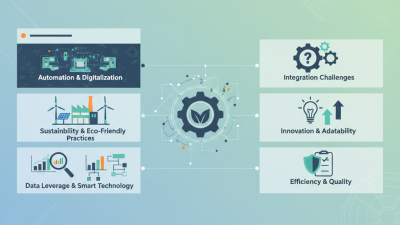
Energy efficiency now shapes purchasing decisions. Modern production lines monitor humidity, yarn tension, heat, and machine vibration. These details reduce stoppages and material waste. Digital controls also support smaller production batches and faster design changes. However, market estimates are not perfectly consistent. Research firms use different definitions, exchange rates, and equipment categories. That limitation deserves attention. A large installed base can also hide aging machines, weak maintenance, and uneven worker training. The machinery sector therefore does more than sell equipment; it influences productivity, resource use, product quality, and factory resilience. Some improvements look impressive on paper. Real performance still depends on operators, maintenance routines, and reliable power.

Key Criteria for Comparing Textile Machinery Manufacturers

Top Textile Machinery Manufacturers Worldwide?

Key Criteria for Comparing Textile Machinery Manufacturers

Comparing textile machinery manufacturers requires more than checking production speed. In a factory visit, inspect machine frames, control panels, and working noise. Vibration often reveals problems that brochures do not mention. Ask for verified output data under materials similar to yours, such as cotton blends, recycled fibers, or fine polyester yarns.

Technical expertise matters throughout the machine’s working life. Examine automation options, sensor accuracy, maintenance access, and energy use per kilogram of fabric. A fast machine may become expensive if cleaning takes hours or replacement parts travel slowly. Request service response times in writing. Also, speak with current users about training quality, software updates, and recurring faults. Their experience can expose gaps in polished sales presentations.

Reliability needs evidence.

Review factory acceptance tests, warranty terms, safety certifications, and documented performance records. Compare total ownership costs, not only the purchase price. A manufacturer with strong engineering may still offer weak communication, so evaluate both carefully. I once treated a detailed specification sheet as proof of quality; later, installation delays changed that view. It was a useful mistake, but an avoidable one. Require sample production before signing, and test fabric uniformity, waste levels, and shutdown recovery. No supplier scores perfectly. The practical choice is the manufacturer whose weaknesses are visible, manageable, and honestly discussed.

Top Textile Machinery Manufacturers Worldwide? - Key Criteria for Comparing Textile Machinery Manufacturers

Evaluation Dimension What to Compare Relevant Industry Benchmark or Requirement Recommended Verification Method Suggested Evaluation Weight
Machine Performance Production speed, output stability, fabric quality, process repeatability and performance under continuous operation. Compare output using the same raw material, machine width, yarn or fabric specification, and operating conditions. Request factory acceptance-test results, production samples, operating videos and references using comparable materials. 15%
Product Range and Process Coverage Availability of machinery for spinning, weaving, knitting, dyeing, printing, finishing, nonwovens or garment production. A broader compatible product portfolio can reduce integration risks in multi-stage textile projects. Review the technical catalogue, process flow, compatible upstream and downstream equipment, and optional modules. 10%
Energy Efficiency Electricity, steam, compressed-air and water consumption per kilogram or metre of finished product. Use consumption per unit of output rather than total installed motor power; compare machines under identical production conditions. Check audited energy data, utility-consumption specifications, heat-recovery features and variable-frequency drive applications. 12%
Automation and Digital Integration Automatic control, recipe management, production monitoring, alarms, traceability and connectivity with factory systems. Evaluate support for commonly used industrial communication protocols and structured production data export. Request a live software demonstration, network architecture, data-security documentation and integration test plan. 10%
Product Quality and Process Control Control of tension, temperature, moisture, speed, pressure, density, colour consistency and dimensional stability. The machine should maintain defined process tolerances throughout normal production, not only during short demonstrations. Review quality-control records, defect-rate data, calibration procedures and samples from long-duration trials. 12%
Reliability and Availability Expected service life, mean time between failures, maintainability, uptime and spare-part availability. Compare documented uptime and maintenance requirements for similar installations and operating schedules. Ask for anonymised installed-base statistics, preventive-maintenance schedules and warranty-claim information. 12%
Safety and Regulatory Compliance Machine guarding, emergency stops, electrical safety, risk assessment, user documentation and market-specific compliance. Machinery supplied to the European Economic Area must meet applicable CE conformity requirements; other markets may have additional rules. Request the declaration of conformity, risk assessment, safety-circuit documentation and applicable test certificates. 10%
After-Sales Service Installation, commissioning, operator training, troubleshooting, remote support and field-service response. Assess support coverage in the destination country or region and define response times contractually. Review service organisation, engineer locations, escalation procedures, training plans and service-level agreements. 10%
Spare Parts and Lifecycle Support Availability of critical components, obsolescence management, standardisation and long-term technical support. Critical wear parts should have documented part numbers, recommended stock levels and defined supply lead times. Request a spare-parts list, lead-time schedule, pricing policy and written commitment for software and component support. 6%
Total Cost of Ownership Purchase price, installation, utilities, labour, maintenance, consumables, upgrades, downtime and disposal costs. Compare the full lifecycle cost over the planned operating period instead of comparing purchase price alone. Build a five- to ten-year cost model using verified consumption, maintenance and production assumptions. 10%
Sustainability and Resource Efficiency Material waste, water use, emissions, recyclable components, chemical management and environmental reporting. Prioritise measurable reductions in energy, water, auxiliary materials and production waste per unit of output. Check environmental product data, utility measurements, waste-reduction results and relevant management-system certificates. 8%
Customisation and Scalability Ability to adapt machine width, gauges, feeders, software, automation level and production capacity. The proposed configuration should support current products while allowing documented future upgrades. Review option lists, engineering drawings, upgrade paths, changeover procedures and maximum supported configurations. 5%
Delivery and Project Execution Engineering schedule, manufacturing lead time, logistics, installation planning and commissioning milestones. The project plan should identify design approval, factory testing, shipment, installation, training and performance acceptance dates. Evaluate the project schedule, delivery-risk register, acceptance criteria and responsibilities matrix. 5%
Note: Suggested evaluation weights are a neutral procurement framework. Actual priorities should be adjusted according to product type, production volume, destination-market regulations and operating conditions.

Leading Manufacturers by Textile Production Segment

Top Textile Machinery Manufacturers Worldwide: Leading Manufacturers by Textile Production Segment

Textile machinery manufacturers are best compared by production segment, not by global reputation alone. In spinning, reliable systems control fiber opening, carding, drafting, and yarn consistency. Operators often inspect sliver regularity beside the machine. Small variations can become visible defects in finished fabric. Modern spinning equipment also uses sensors to reduce waste and detect tension changes early. Still, automation cannot replace skilled maintenance. Dust, vibration, and poorly aligned rollers remain practical concerns.

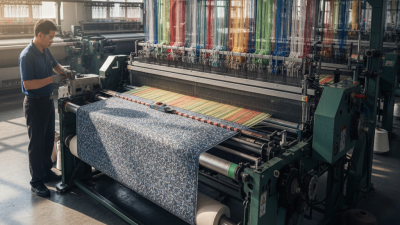
Weaving machinery must balance speed, fabric width, and warp tension. A stable loom produces cleaner edges and fewer stoppages. Knitting equipment focuses on loop formation, gauge control, and pattern flexibility. A minor needle fault can create a long vertical mark. Dyeing and finishing machinery demands accurate temperature, pressure, chemical dosing, and water management. Uneven heat leaves patchy shades. It happens.

Nonwoven production uses carding, web forming, bonding, and cutting systems. These machines serve filtration media, hygiene products, and technical textiles. Digital inspection equipment adds value across many segments by identifying holes, stains, and broken yarns during production. However, equipment rankings can be misleading. A fast machine may perform poorly in a humid facility with limited technical support. Buyers should examine trial data, energy use, spare-part access, operator training, and lifecycle maintenance. The best choice is often less spectacular, but more dependable.

Top Textile Machinery Manufacturers Worldwide? — Leading Manufacturers by Textile Production Segment

Global textile machinery shipment volumes by production segment, 2023

Spinning equipment represented the largest shipment volume in 2023, led by short-staple spinning spindles. Open-end spinning, texturing, weaving, and circular knitting machinery recorded substantially lower unit volumes because each segment serves different production processes and capacity requirements. Figures are rounded global shipment volumes reported in the International Textile Machinery Federation’s 2023 textile machinery statistics.

Regional Strengths in the Global Textile Machinery Market

Textile machinery leadership is not concentrated in one country. Regional strengths reflect different production needs, engineering traditions, and labor conditions. East Asian manufacturers often excel in high-speed spinning, weaving, knitting, and automated material handling. Their systems suit large mills that measure output by the minute. Stable software integration and compact layouts are practical advantages.

European manufacturers are widely respected for precision engineering, energy control, and specialized finishing equipment. Their machines often support technical textiles, premium fabrics, and strict quality requirements. Engineers may spend more time on calibration, testing, and operator training. That slower preparation can reduce faults during long production runs. However, advanced features can increase purchase and maintenance costs.

South Asian producers often focus on adaptable machinery for cotton, blended yarns, and cost-sensitive factories. Local service networks and simpler mechanical designs can matter more than maximum speed. North American suppliers commonly contribute expertise in automation, process monitoring, and digital production analysis. These regional patterns help buyers compare equipment more intelligently, but they should not become fixed assumptions. Regional labels can mislead.

A reliable evaluation should include factory trials, energy readings, spare-part availability, and technician response times. Ask how the machine performs after six months, not only during a showroom demonstration. Real mills reveal details that brochures miss. Noise, dust buildup, cleaning access, and software learning time can shape daily productivity. No region is perfect. Procurement teams still need independent testing, clear contracts, and realistic operator feedback.

Technology Trends Shaping Textile Machinery Competition

Top Textile Machinery Manufacturers Worldwide?

Technology now defines competition in textile machinery more than production scale alone. The ITMF International Textile Machinery Shipment Statistics reported 8.61 million new short-staple spindles shipped in 2023. Open-end rotor shipments reached about 1.6 million units. These figures show continued investment in flexible, automated systems, even during uneven demand.

Digital sensors are becoming standard. They track vibration, yarn tension, humidity, and energy use in real time. Machine-learning software can identify defects before operators notice them. Grand View Research estimates the global textile machinery market could grow at roughly 4.7% annually from 2024 to 2030. Energy performance will influence that growth. The International Energy Agency links industrial efficiency with broader emissions reductions, making lower-power motors and heat recovery more valuable.

Automation is not always the complete answer. A fast machine still fails when maintenance skills are limited. Digital twins may reduce testing time, but poor factory data can produce confident mistakes. I may be overvaluing software here. Practical competition will also depend on modular repairs, operator training, and reliable spare-part access. Manufacturers that combine accurate controls with simple servicing may gain trust on crowded production floors. Small details matter. A loose sensor cable can erase an impressive efficiency claim.