

2026 Best Textile Waste Recycling Options for Global Buyers?
Global buyers entering the 2026 textile waste market need more than attractive recycling claims. They need clear material data, realistic capacity checks, and evidence from collection to final processing. A cotton-rich factory cutting room may suit mechanical recycling, while blended uniforms often require different treatment. The label alone is not enough.
This guide examines practical textile waste recycling options for international purchasing teams. It considers fiber composition, moisture, dyes, trims, contamination, transport distance, and end-product quality. Buyers can compare reuse, fiber-to-fiber recycling, downcycling, and carefully managed energy recovery. Each option carries different costs and environmental trade-offs. Some recycled fibers may lose strength after repeated processing. That detail matters.
Reliable sourcing begins with small questions. Who sorted the material? What percentage was rejected? Can the supplier provide batch records, test reports, and chain-of-custody documents? Independent certifications may support trust, but they do not replace supplier audits or sample testing. Regulations also differ between exporting and importing markets, so professional legal and customs advice remains necessary.
The strongest programs are not always the most technologically advanced. Sometimes, clean cutting scraps create better value than mixed household collections. Sometimes, local reuse prevents more emissions than long-distance recycling. The answer depends on evidence, not marketing language. This article offers a practical framework for selecting suitable textile waste solutions in 2026. It also recognizes an uncomfortable truth: recycling is not a complete answer to overproduction. Better design, longer use, and measurable purchasing standards must develop alongside recycling capacity.
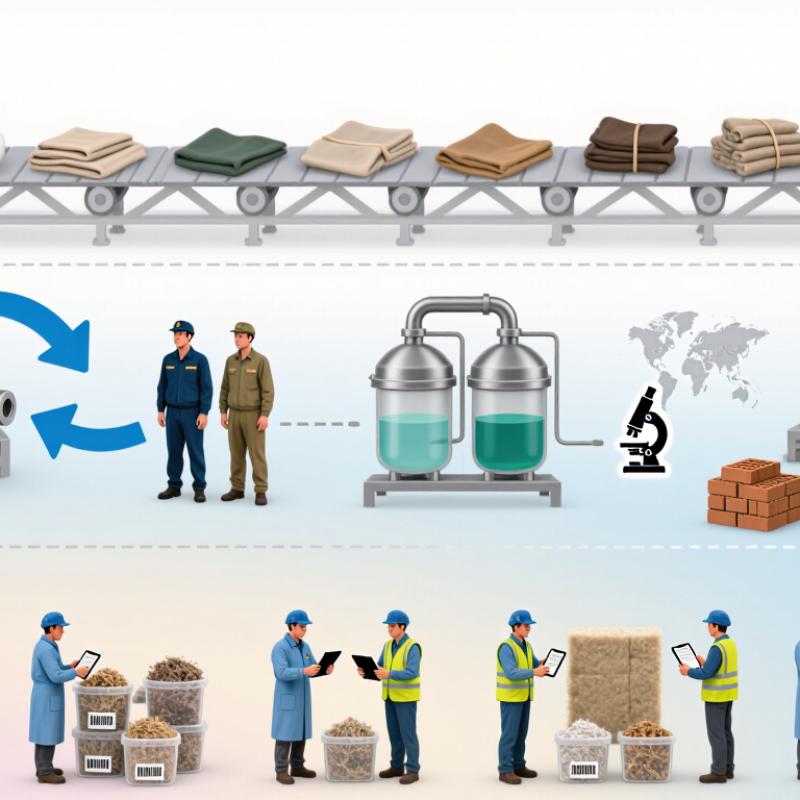
Textile Waste Recycling: Types, Sources, and Global Market Needs
Textile Waste Recycling: Types, Sources, and Global Market Needs
Textile waste comes from factories, households, hotels, hospitals, and garment cutting rooms. Pre-consumer scraps are usually cleaner and easier to sort. They may include cotton offcuts, polyester selvages, or rejected rolls. Post-consumer textiles often contain buttons, zippers, stains, and mixed fibers. These details affect both processing cost and final quality.
Mechanical recycling suits many mono-material fabrics. It opens cloth into fibers for insulation, felt, stuffing, or lower-grade yarn. Chemical recycling can separate selected fibers, but it needs controlled inputs and careful testing. Reuse may be more practical when uniforms, towels, or bedsheets remain strong. I have seen buyers overlook moisture levels. That mistake can increase odor, mold, and transport losses.
Global buyers increasingly request stable specifications, not vague claims. Suppliers should provide fiber composition, contamination rates, bale weight, moisture data, and monthly supply capacity. Clear photographs and batch records also improve trust. Regional demand differs. Some markets need wiping cloths, while others seek recycled fiber for nonwoven products. Blended textiles remain difficult. Current technology cannot solve every blend economically. Buyers should test a small shipment before signing a long contract. A perfect sample can hide inconsistent sorting. That deserves attention.
2026 Best Textile Waste Recycling Options for Global Buyers? - Textile Waste Recycling: Types, Sources, and Global Market Needs
| Recycling Option | Main Textile Waste Types | Common Sources | Typical Input Requirements | Main Recovered Output | Best Buyer Applications | Commercial Advantages | Key Limitations and Risks | 2026 Global Market Need |
|---|---|---|---|---|---|---|---|---|
| Mechanical fiber recycling | Cotton, wool, linen, acrylic, polyester, and blended fabrics that can be shredded. | Pre-consumer cutting scraps, spinning waste, unsold garments, post-consumer clothing, and household textiles. | Sorted by fiber and color where possible; low contamination; removal of zippers, buttons, elastane-heavy sections, and non-textile components. | Recycled fiber, flock, shoddy, nonwoven feedstock, or regenerated yarn blends. | Insulation, wiping cloths, mattress filling, acoustic panels, automotive textiles, carpets, and lower-count yarns. | Established equipment, relatively low chemical use, and suitability for many waste streams. | Fiber damage and shortening can reduce strength; blends and dyes are difficult to separate; repeated recycling may lower performance. | High demand for cost-effective recycled fiber and nonwoven materials, especially where feedstock is locally collected. |
| Mechanical cotton recycling | Cotton cutting waste, denim scraps, cotton knitwear, and cotton-rich post-consumer textiles. | Garment factories, denim production, uniform programs, collection centers, and returned clothing. | Cotton-rich material with controlled moisture, limited elastane, and effective removal of hard trims and contaminants. | Short recycled cotton fiber, yarn blends, cellulose-rich fiber opening, and nonwoven material. | Sweatshirts, denim blends, towels, bags, home textiles, insulation, and industrial wipes. | Strong availability of pre-consumer waste and relatively simple sorting for mono-material factory scraps. | Recycled cotton is generally shorter and weaker than virgin cotton, so blending with stronger fibers is often required. | Reliable demand for traceable cotton waste, color-sorted feedstock, and recycled-content yarns with consistent specifications. |
| Polyester depolymerization | Polyester garments, PET textile waste, polyester yarn waste, and polyester-rich fabric rolls. | Apparel factories, textile mills, uniforms, sportswear, household textiles, and post-consumer collection systems. | High polyester content; controlled dyes and finishes; low PVC, metal, elastane, and mixed-fiber contamination. | Purified chemical intermediates that can be converted into polyester polymer, filament, or staple fiber. | Apparel, home textiles, technical fabrics, packaging-related polyester applications, and durable filament products. | Potential to produce fiber with properties closer to virgin polyester than mechanically recycled fiber. | Higher capital and processing requirements; feedstock purity, additives, colorants, and mass-balance accounting affect economics. | Growing need for textile-to-textile polyester feedstock and verified recycled content as brands and regulators increase circularity requirements. |
| Cellulose dissolution and regeneration | Cotton-rich textiles, cotton-rich blends, linen, and other cellulosic waste streams. | Garment cutting waste, used clothing, hotel textiles, household linens, and industrial textile offcuts. | High cellulose content; controlled dyes, finishes, elastane, polyester, coatings, and metal accessories. | Regenerated cellulosic pulp, staple fiber, filament, or cellulose-based nonwoven feedstock. | Apparel, lining fabrics, home textiles, hygiene materials, and selected technical textile products. | Can support higher-value fiber production and may handle some feedstocks unsuitable for simple mechanical recycling. | Requires advanced solvent recovery, strict process control, and effective removal of non-cellulosic components. | Demand is increasing for scalable textile-to-textile cellulose recycling with documented chemical management and input traceability. |
| Wool and animal-fiber recycling | Wool garments, knitwear, uniforms, blankets, and wool-rich production scraps. | Spinning and knitting mills, garment factories, tailoring operations, collection centers, and used clothing streams. | Sorted by fiber type and color; low oil, moisture, synthetic-fiber, and hard-trim contamination. | Recycled wool fiber, reclaimed yarn, felt, insulation, and blended spinning feedstock. | Knitwear, blankets, felt products, insulation, upholstery, and premium recycled yarn blends. | Color sorting can reduce dyeing needs, and wool has established reuse and recycling pathways. | Limited supply compared with common synthetic and cotton waste; fiber length and contamination strongly influence value. | Niche but stable demand for traceable recycled wool and high-quality sorted animal-fiber feedstock. |
| Reuse, repair, and upcycling | Wearable garments, surplus rolls, unused fabric panels, uniforms, and products requiring minor repair. | Consumer returns, overstock, damaged packaging, factory surplus, rental systems, and institutional collections. | Good condition, safe construction, accurate grading, repairability, and clear information about material composition. | Second-life garments, refurbished products, remanufactured items, patchwork goods, and cut-and-sew components. | Resale, workwear, uniforms, educational materials, accessories, home décor, and community clothing programs. | Usually preserves more product value and avoids the energy-intensive fiber-recovery stage. | Sorting, hygiene, repair labor, reverse logistics, and uncertain resale demand can reduce margins. | High need for professional grading, repair networks, digital product information, and reliable cross-border resale logistics. |
| Nonwoven and insulation conversion | Mixed textile scraps, short fibers, cotton waste, polyester waste, and low-grade post-consumer textiles. | Sorting rejects, cutting rooms, mattress production, household textiles, and municipal collection streams. | Basic sorting, drying, removal of hazardous materials, and control of odor, dust, and biological contamination. | Felt, thermal insulation, acoustic panels, padding, geotextile-like products, and molded nonwovens. | Buildings, furniture, vehicles, packaging protection, mattresses, and industrial filtration support materials. | Can accept shorter fibers and mixed materials that are unsuitable for high-quality yarn production. | Lower product value than textile-to-textile recycling; fire, odor, emissions, and building-code requirements must be verified. | Strong regional demand where construction, automotive, furniture, and acoustic-material markets can absorb local recycled output. |
| Chemical recycling of polyamide | Polyamide textiles, fishing nets, industrial yarns, hosiery, and polyamide-rich garments. | Apparel factories, carpet production, technical textiles, fishing-related waste, and post-consumer products. | High polyamide content; removal of PVC, elastane, coatings, pigments, metals, and other polymer types. | Recovered chemical building blocks for new polyamide polymer and textile-grade yarn. | Sportswear, hosiery, carpets, swimwear, industrial fabrics, and durable technical textiles. | Potential for repeated polymer-to-polymer recycling with performance close to the original material. | Technology availability, collection volumes, contamination, energy use, and high processing costs can restrict deployment. | Emerging demand for high-purity polyamide waste and closed-loop technical textile feedstock. |
| Thermal conversion and refuse-derived fuel | Heavily contaminated, wet, composite, or non-recyclable textile residues after higher-value recovery options. | Sorting residues, contaminated post-consumer textiles, coated fabrics, and mixed municipal waste. | Compliance with waste classification, moisture limits, hazardous-content controls, and emissions regulations. | Recovered energy or fuel substitute; this is an end-of-life route rather than fiber-to-fiber recycling. | Cement, industrial heat, waste-treatment, and energy-recovery applications where legally permitted. | Provides an outlet for residual waste that cannot be reused or materially recycled. | Does not preserve textile material value and may face restrictions because of emissions and waste-hierarchy requirements. | Necessary as a controlled residual route, but global buyers increasingly prioritize reuse and material recycling first. |
| Sorting, grading, and preprocessing services | Post-consumer garments, household textiles, factory scraps, mixed bales, and unsold inventory. | Municipal collection, retail take-back, charity collection, manufacturers, importers, and institutional users. | Accurate composition identification, moisture control, removal of hazardous items, bale traceability, and consistent grading. | Reusable garments, fiber-specific fractions, color-sorted textiles, shredded feedstock, and documented waste streams. | All recycling routes; especially useful for exporters, recyclers, manufacturers, and public collection programs. | Improves downstream yield, reduces contamination, and enables buyers to match feedstock with the correct technology. | Labor, automation investment, inconsistent labels, and mixed-fiber products make accurate sorting difficult. | One of the most immediate global needs because separate collection and producer-responsibility systems require dependable feedstock preparation. |
Related Posts
-
China Top 10 Textile Waste Recycling Suppliers
-
How to Achieve Textile Sustainability in Fashion Industry?
-
How to Reduce Textile Waste in Global Sourcing 2026?
-

Need Fabric Tips for Sourcing the Best Materials?
-
Why Choose Smit Rapier Loom for Your Textile Production Needs?
-

Best Loom Machine for Efficient Production Solutions?