Top 10 Carbon Fabric Suppliers for Global Buyers
Choosing the right carbon fabric supplier affects strength, weight, production stability, and long-term project costs. Global buyers need more than a polished website or a low quotation. They should examine fiber grade, weave structure, areal weight, roll width, surface treatment, and resin compatibility. Small details matter. A 200-gram fabric behaves differently from a 300-gram fabric during draping, infusion, and curing.
Composite-materials expert Dr. Stephen W. Tsai offers a useful reminder: “Carbon fiber is only as good as the design and process around it.” That principle guides this overview of the Top 10 Carbon Fabric Suppliers for Global Buyers. The selection considers manufacturing experience, technical documentation, product consistency, export capability, quality systems, and practical customer support. Supplier responsiveness also deserves attention. Delayed samples can interrupt an entire production schedule.
No supplier is perfect. Some offer impressive technical performance but limited stock in certain regions. Others provide competitive prices but weaker application support. Buyers should request certificates, batch information, safety data, and fabric samples before placing large orders. Comparing suppliers under identical requirements creates a fairer picture. It also exposes hidden differences in delivery time and material handling.
This guide is designed for aerospace, automotive, marine, sporting goods, wind energy, and industrial applications. It does not treat carbon fabric as a universal solution. Cost, processing conditions, design loads, and environmental exposure still matter. A careful purchasing decision begins with evidence, not assumptions.
Understanding Carbon Fabric and Its Main Global Applications
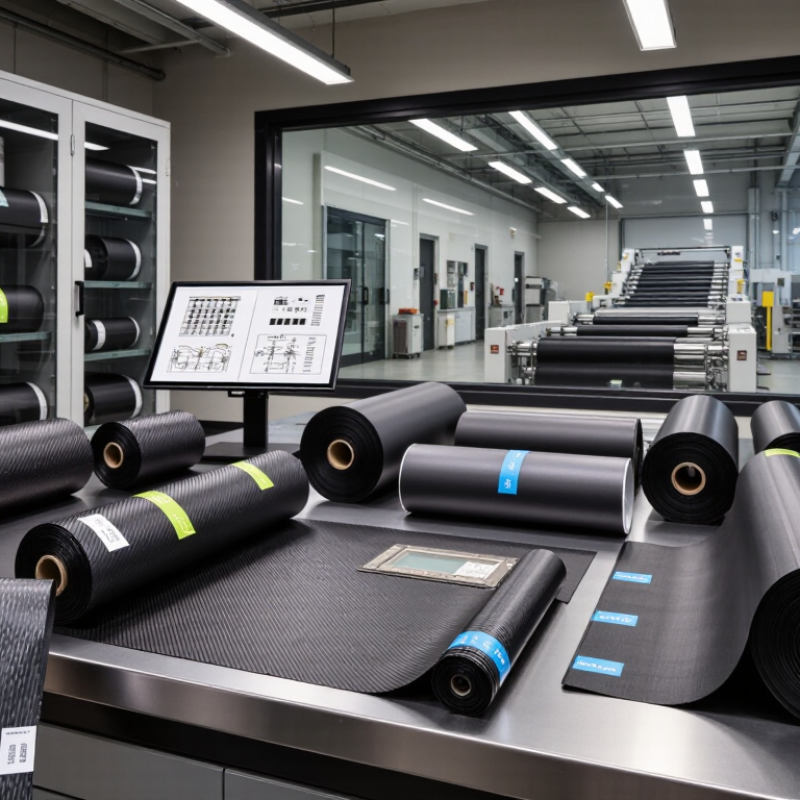
Carbon fabric is a textile reinforcement made from carbon fibers. It combines low weight with high tensile strength and stiffness. Common constructions include plain weave, twill, and unidirectional layers. Each structure changes drape, resin flow, and finished-part performance. This matters when comparing global suppliers.
Its applications extend across electric vehicles, aircraft, wind turbines, sports equipment, and industrial machinery. The IEA’s Global EV Outlook 2024 reported nearly 14 million electric car sales in 2023. Lightweight carbon structures can reduce vehicle mass, although cost remains a serious limitation.
The Global Wind Report 2024 recorded 117 GW of new wind capacity installed in 2023. Carbon reinforcement is increasingly used in demanding blade sections, especially spar caps. Market estimates still vary widely. That uncertainty deserves attention.
Tips: Check areal weight, weave style, tensile data, resin compatibility, and batch traceability. Request technical datasheets and sample panels before placing large orders. A fabric that feels flexible may perform poorly after curing. Temperature, humidity, and storage time also influence handling quality. Suppliers should explain testing methods, not only publish impressive numbers.
How the Top 10 Carbon Fabric Suppliers Are Selected and Compared
Selecting the top 10 carbon fabric suppliers requires more than checking production volume. The comparison begins with fiber grade, weave architecture, areal weight, resin compatibility, and documented quality controls. The Global Wind Energy Council’s Global Wind Report 2024 recorded 117 GW of new wind capacity in 2023. The IEA’s Global EV Outlook 2024 reported nearly 14 million electric car sales in 2023. These figures show why stable fabric supply matters across energy, mobility, and industrial applications.
Each supplier is compared through practical evidence. The review examines ISO 9001 systems, batch traceability, technical data sheets, sample consistency, lead times, and export experience.
Tensile testing should follow recognized methods, such as ASTM D3039, when laminate performance is assessed. We also check roll width, edge quality, packaging, and storage guidance.
A low price means little if fabric arrives with uneven tension or unclear sizing information. Public records can hide these weaknesses. No ranking is perfect.
Supplier Profiles: Products, Manufacturing Strengths, and Market Coverage
The top ten carbon fabric suppliers serve different industrial priorities. Their product ranges often include unidirectional tape, woven cloth, multiaxial fabric, and prepreg systems. Standard weights may range from 90 to 600 grams per square meter. Buyers should confirm fiber grade, weave style, width tolerance, and resin compatibility before ordering.
Manufacturing strength varies sharply across supplier profiles. Some operate automated weaving lines for stable thickness and clean edges. Others focus on custom laminates, small trial batches, or rapid sampling. Strong suppliers provide lot numbers, technical data sheets, inspection records, and controlled storage. Their facilities may include climate-controlled rooms, ultrasonic inspection, and calibrated cutting equipment. These details matter when fabrics enter aerospace interiors, wind blades, sporting goods, or pressure-resistant components.
Market coverage also separates experienced exporters from capable local mills. Larger suppliers may support distributors across Europe, Asia, and North America. Smaller producers can offer better communication and flexible development support. Export history, packaging quality, lead times, and after-sales response deserve equal attention. A neat website proves little. I would request a sample roll and test it under actual processing conditions. Some suppliers report impressive tensile figures, yet handling performance can disappoint. No supplier is perfect. Buyers should record defects, ask difficult questions, and compare evidence rather than promises.
Quality, Certifications, Customization, and Delivery Factors for Buyers
Top 10 Carbon Fabric Suppliers for Global Buyers
Quality, Certifications, Customization, and Delivery Factors for Buyers
A credible supplier should disclose fiber grade, tow size, weave style, and areal weight. Buyers should request batch records, test results, and resin compatibility data. ISO 9001 supports process control, while AS9100 is more relevant for aerospace supply chains. Certification helps, but it does not replace independent testing.
Demand is becoming harder to predict. The International Energy Agency reported nearly 14 million electric car sales in 2023. This growth increases demand for lightweight composite components and may tighten carbon fabric capacity. Buyers should compare production capacity, minimum order quantities, and backup facilities. A low quotation can still become expensive.
Customization needs practical limits. Ask whether the supplier can produce unidirectional, twill, or plain-weave fabric consistently. Confirm roll width, fabric length, surface treatment, and packaging conditions. Moisture protection matters during long ocean shipments. Delivery estimates should include production, inspection, customs, and inland transport. The World Bank’s Logistics Performance Index shows major differences in global shipment reliability, so location alone is not a sufficient advantage.
Check the details. Request retained samples and a corrective-action process for defects. Some suppliers promise flexibility but resist small trial orders. That warning deserves attention. I would also verify whether certificates apply to the actual factory, not merely the trading office. Product data should be current, traceable, and reviewed against ASTM or ISO test methods before approval.
Top 10 Carbon Fabric Suppliers for Global Buyers - Quality, Certifications, Customization, and Delivery Factors for Buyers
Carbon-fiber tow size is a practical starting point for comparing supplier capability. The chart uses industry-standard nominal filament counts and representative linear-density values; actual values vary by fiber grade, sizing, and manufacturer.
For global sourcing, buyers should verify consistent tensile performance, relevant certifications such as ISO 9001, AS9100, IATF 16949, or ISO 14001, customization options for tow and fabric formats, and documented delivery performance. Nominal tow counts represent approximately 1,000 to 24,000 filaments per bundle.
How Global Buyers Can Choose the Right Carbon Fabric Supplier
Choosing carbon fabric involves more than comparing price per kilogram. Check the fabric’s tow size, weave pattern, areal weight, tensile strength, and resin compatibility. These details affect handling, draping, curing, and final part performance. Request recent technical data, not recycled catalog pages. A supplier should explain test methods and acceptable tolerances clearly.
Ask for samples from a production lot. Inspect fiber alignment, roll edges, surface cleanliness, and packaging after transport. Small defects matter. A crushed roll can create wrinkles before fabrication even begins. Reliable suppliers provide batch numbers, inspection records, and traceable certificates. They should also confirm moisture protection, storage conditions, lead times, and export documentation.
Communication reveals practical experience. Ask how the supplier handles inconsistent width, delayed vessels, or failed incoming inspections. A strong technical team will discuss solutions without promising perfection. Factory audits can verify equipment, process controls, and quality staff, although one visit cannot prove long-term consistency. Compare sample results with independent testing when the application carries serious performance requirements. Price still matters, but unstable quality can cost more through scrap, rework, and missed production schedules.
Top 10 Carbon Fabric Suppliers for Global Buyers - How Global Buyers Can Choose the Right Carbon Fabric Supplier
| Rank | Supplier Profile | Primary Production Region | Common Fabric Types | Typical Areal Weight | Typical Width | Smallest Standard Order | Typical Lead Time | Quality Documentation | Best Fit for Global Buyers |
|---|---|---|---|---|---|---|---|---|---|
| 1 | High-volume industrial producer | East Asia | Plain, twill, unidirectional, multiaxial | 90–600 g/m² | 1.0–1.5 m | 100–300 m² | 15–30 days | COA, TDS, QC report | Large-volume industrial programs |
| 2 | Aerospace-oriented technical supplier | Western Europe | Balanced, spread-tow, prepreg-compatible fabrics | 80–450 g/m² | 1.0–1.3 m | 50–150 m² | 30–60 days | Lot traceability, COA, TDS | Aerospace and high-specification parts |
| 3 | Automotive composite specialist | Europe and North America | Twill, plain, stitched multiaxial | 160–600 g/m² | 1.0–1.5 m | 100–500 m² | 20–45 days | COA, batch records, test data | Automotive body and structural components |
| 4 | Wind-energy reinforcement supplier | East Asia | Unidirectional, biaxial, triaxial | 300–1,200 g/m² | 1.0–2.5 m | 500–1,000 m² | 25–50 days | COA, areal-weight checks, inspection report | Wind blades and large composite structures |
| 5 | Custom-weave development supplier | South Asia | Plain, twill, satin, custom constructions | 90–800 g/m² | 1.0–1.6 m | 50–200 m² | 20–45 days | TDS, COA, sample approval records | Special designs and medium-volume orders |
| 6 | Marine composite fabric supplier | North America | Plain, twill, biaxial, hybrid-compatible fabrics | 200–600 g/m² | 1.0–1.5 m | 25–100 m² | 7–21 days | TDS, COA, resin-compatibility guidance | Boatbuilding, repairs, and maintenance |
| 7 | Rapid-delivery distributor | North America and Europe | Standard plain and twill fabrics | 90–600 g/m² | 1.0–1.5 m | 5–25 m² | 2–10 working days | TDS, COA upon request | Prototyping and urgent replacement orders |
| 8 | Construction-strengthening specialist | Europe and the Middle East | Unidirectional, bidirectional, grid fabrics | 200–600 g/m² | 0.5–1.0 m | 50–200 m² | 15–35 days | TDS, COA, installation guidance | Concrete repair and structural strengthening |
| 9 | Electronics and lightweight-parts supplier | East Asia | Fine plain weave, twill, thin spread-tow | 30–200 g/m² | 0.5–1.3 m | 25–100 m² | 20–40 days | TDS, COA, thickness and weight data | Lightweight housings and precision components |
| 10 | Small-batch composite fabric converter | Southeast Asia | Plain, twill, stitched and cut-to-width fabrics | 100–600 g/m² | 0.3–1.5 m | 10–50 m² | 10–30 days | TDS, COA, dimensional inspection | Custom cutting and small development runs |
Related Posts
-
How to Choose the Best Carbon Fabric for Your Next Project?
-

China Top Carbon Fabric Innovations and Their Impact on the Industry?
-
Top 10 Fabric Weaving Techniques You Should Know?
-
What is a Fabric Weaving Machine and How Does It Work?
-
Top 10 Loom Weaving Machines for Global Buyers in 2026?
-
How to Source Quality Italian Fabric for Your Business?