
How to Find the Best Fabric Suppliers Worldwide?
Finding reliable fabric suppliers worldwide requires more than comparing prices on a marketplace. Global fiber production reached approximately 124 million tonnes in 2023, according to Textile Exchange’s 2024 Materials Market Report. The report expects production to approach 160 million tonnes by 2030. This scale creates choice, but it also increases confusion. When “i need fabric” becomes an urgent purchasing message, buyers may overlook fiber content, finishing quality, or supplier reliability.
A professional sourcing process begins with evidence. Request fabric composition, GSM, width, dyeing method, test reports, and a physical sample. Check whether certificates match the exact factory and material. Textile Exchange identifies recycled polyester, organic cotton, and preferred fibers as important parts of the industry’s transition. However, certification alone does not guarantee consistent production. A laboratory report from an accredited facility provides stronger reassurance. So does a repeatable inspection record.
Supplier experience matters.
Ask about minimum order quantities, sample fees, production capacity, and realistic lead times. Compare these answers with trade data from the International Trade Centre and market guidance from the International Trade Administration. Their resources help buyers understand sourcing countries, customs categories, and commercial risks. Still, public databases can be incomplete or outdated. I have found that a clear video call, a factory address, and a small trial order often reveal more than polished sales language. No supplier scorecard is perfect. It should be revised after every sample, shipment, and quality dispute. The following guide explains how to identify capable fabric suppliers, verify their claims, and build a sourcing decision based on measurable facts rather than attractive promises.
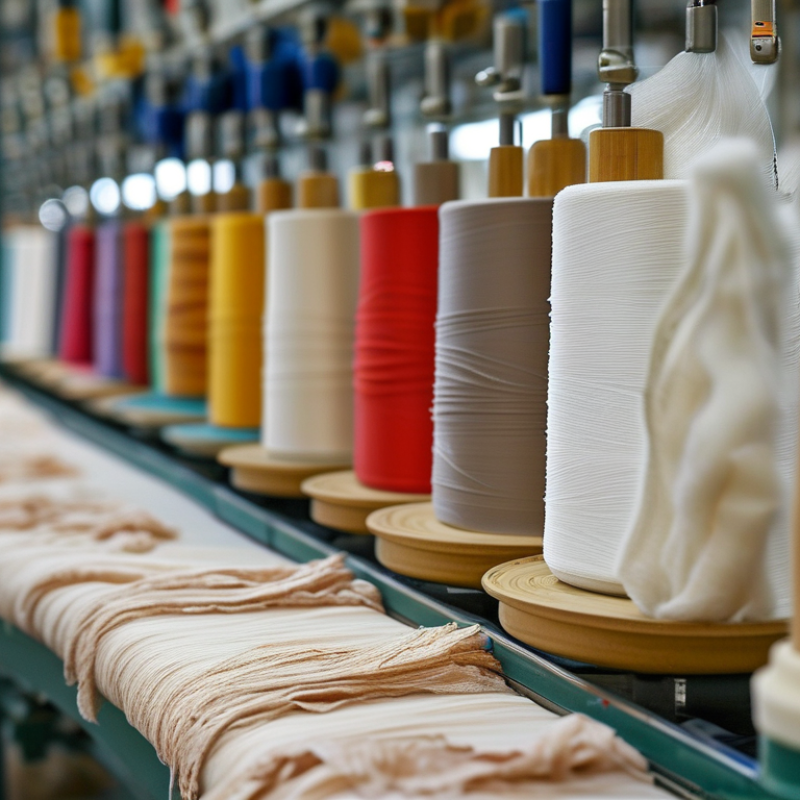
Define Your Fabric Requirements and Supplier Selection Criteria
Before contacting fabric suppliers, define the material like a production engineer, not a casual buyer. Record fiber content, fabric weight, width, construction, finish, color standard, shrinkage limit, and testing needs. Add the final garment use: children’s wear, uniforms, sportswear, or home textiles. A 180 gsm cotton jersey behaves differently after washing and dyeing. Specify acceptable tolerances, not only ideal numbers.
Textile Exchange’s 2024 Materials Market Report estimated global fiber production at 124 million tonnes in 2023. It also projects growth to 160 million tonnes by 2030. This scale makes traceability and material verification increasingly important. Ask suppliers for test reports, fiber certificates, production capacity, minimum order quantities, sample approval procedures, and realistic lead times. The International Trade Centre’s textile sourcing guidance also emphasizes clear specifications and supplier due diligence. Request a factory address, audit evidence, and references from comparable orders. Documents can be incomplete.
Your selection scorecard should balance quality, cost, communication, compliance, and resilience. I once treated a low quotation as a strong advantage; the later rework cost more than the original saving. Test bulk-like samples before signing a purchase agreement. Check color consistency under daylight, seam behavior, pilling, odor, and dimensional stability. Ask how the supplier handles rejected rolls and delayed shipments. Keep written records of every correction. A supplier may promise flexibility, yet only production trials reveal it. Evaluate performance over several orders, not one successful sample.
Research Global Supplier Regions and Manufacturing Capabilities
Finding a reliable fabric supplier starts with regional research, not a quick directory search. Each manufacturing region develops strengths through raw materials, equipment, labor skills, and export infrastructure. Cotton mills in South Asia may offer broad spinning and weaving capacity. Türkiye often connects European buyers with integrated mills and shorter transit routes. East Asian production centers can support technical fabrics, precise knitting, and large-volume consistency. These patterns are useful, but never absolute. A capable factory can exist outside a famous region.
Map the complete process before contacting suppliers. Ask whether one facility handles spinning, knitting or weaving, dyeing, finishing, inspection, and packing. A supplier using external dyeing partners may face different lead times and quality controls. Request recent samples with fabric weight, width, fiber content, shrinkage, colorfastness, and pilling results. Compare the sample to the production lot, not only to a digital photograph. I once treated a polished sample room as proof of capacity. That was a poor assumption. Production planning mattered more than appearance.
Visit when possible, or arrange a live video walkthrough. Look for running machines, batch records, wastewater controls, trained inspectors, and clearly labeled stock. Independent laboratory testing can verify performance claims. Check minimum order quantities, sample charges, payment terms, and realistic monthly output. Ask how the factory handles rejected rolls and late shipments. A written answer is valuable, but evidence is better. Regional research becomes reliable when location, capability, documentation, and repeated sample performance agree.
Verify Supplier Quality, Certifications, and Production Reliability
Finding a reliable fabric supplier starts with evidence, not attractive photos. Request recent samples and compare GSM, weave density, colorfastness, shrinkage, and surface feel. A fabric roll may look perfect under showroom lights, yet fail after washing. Ask for independent test reports and confirm the laboratory details. Small sample orders reveal more than polished presentations.
Tips: Check each certificate’s issuer, expiry date, and covered production site. Certifications should match the actual fabric and process. Ask for a traceable batch number. Visit the factory when possible, or arrange a live video inspection. Review cutting tables, dyeing records, storage conditions, and finished-roll labels. Do not accept copied documents. Verify them directly through the issuing organization.
Production reliability needs practical questions. Ask how the supplier handles raw-material shortages, machine breakdowns, and urgent quality problems. Request a written production schedule with inspection points. Compare promised lead times with records from recent orders. A supplier that admits delays honestly may be safer than one promising everything. I have learned that communication quality often predicts delivery quality, but it is not proof. Keep checking.
How to Find the Best Fabric Suppliers Worldwide? - Verify Supplier Quality, Certifications, and Production Reliability
| Evaluation Dimension | Recommended Benchmark | Evidence to Request | Verification Method | Suggested Weight | Warning Signs |
|---|---|---|---|---|---|
| Fabric Quality Consistency | Bulk production should match the approved sample in fiber composition, weight, width, color, shrinkage, and appearance. | Approved reference sample, technical specification sheet, color standard, and laboratory test reports. | Conduct pre-production approval, inline inspection, and final random inspection using a documented sampling plan. | 25% | Uncontrolled shade variation, missing specifications, or refusal to provide samples. |
| Defect Control | Use an agreed AQL plan; a commonly used apparel benchmark is AQL 2.5 for major defects and zero tolerance for critical defects. | Recent inspection reports, defect classification guide, corrective-action records, and inspection photos. | Arrange independent pre-shipment inspection and compare results with the purchase specification. | 20% | Repeated defects, incomplete inspection records, or pressure to waive inspection. |
| Fiber and Chemical Safety | The material should comply with the destination market’s restricted-substance requirements and the buyer’s chemical limits. | Current test reports covering fiber content, formaldehyde, azo dyes, heavy metals, pH, and color fastness where applicable. | Use an accredited laboratory and confirm that the report identifies the exact fabric construction and production lot. | 15% | Reports older than the material change date, unclear sample identification, or unsupported compliance claims. |
| Relevant Certifications | Certification must match the product claim, scope, facility, material, and validity period. Examples include ISO 9001, GOTS, GRS, and OEKO-TEX STANDARD 100. | Certificate number, issuing body, scope statement, covered facility, expiry date, and transaction or scope certificate when required. | Verify the certificate directly through the issuing organization or its official certification database. | 10% | Expired certificates, certificates issued to another site, or certificates that do not cover the ordered material. |
| Production Capacity | Verified monthly capacity should exceed the planned order volume and seasonal peak demand without compromising quality. | Machine list, production-line details, monthly output history, staffing information, and capacity-allocation plan. | Review production records and conduct a remote or on-site factory audit. | 10% | Capacity stated only in vague terms, excessive subcontracting, or no documented production plan. |
| Lead-Time Reliability | The supplier should provide written lead times for sampling, lab dips, bulk production, inspection, and shipment, with realistic buffer time. | Historical order schedule, production calendar, shipment records, and delay-recovery procedure. | Compare promised dates with at least three completed orders or documented customer references. | 10% | Frequent unexplained delays, changing dates after deposit, or no escalation contact. |
| Traceability and Documentation | Each production lot should be traceable from raw material intake through dyeing, finishing, inspection, packing, and shipment. | Lot numbers, purchase records, batch records, inspection reports, packing lists, and shipment documents. | Select a finished roll or batch and trace it backward through the supplier’s records. | 5% | Mismatched lot numbers, missing records, or inability to identify subcontracted processes. |
| Social and Environmental Compliance | The facility should comply with applicable labor, workplace safety, waste, wastewater, and environmental regulations. | Recent social audit, environmental permits, wastewater records, worker-safety documentation, and corrective-action plans. | Use an independent audit and verify that corrective actions were closed with objective evidence. | 5% | Restricted site access, undocumented subcontractors, or unresolved serious audit findings. |
| Commercial Fit | Pricing, minimum order quantity, payment terms, packaging, Incoterms, and sample fees should be clearly documented before approval. | Formal quotation, pro forma invoice, payment schedule, packaging specification, and agreed Incoterm. | Compare at least three qualified quotations on an equivalent specification and landed-cost basis. | 5% | Unusually low pricing, hidden fees, unclear payment recipients, or specifications that change after quotation. |
| Recommended Decision Rule | Approve: 85–100 points and no critical compliance failure. Conditional approval: 70–84 points with a corrective-action plan. Reject or re-audit: below 70 points. | Completed supplier scorecard, audit report, test reports, approved sample, and signed technical specification. | Reassess at least annually and after any material, facility, process, or ownership change. | 100% | A high score should not override failed safety tests, counterfeit documents, or serious labor violations. |
Compare Pricing, Minimum Orders, Lead Times, and Shipping Terms
Finding the best fabric supplier worldwide requires more than comparing a price list. I request identical specifications from several suppliers. Include fiber content, fabric weight, width, color standard, finish, and testing requirements. A low price may hide sampling fees, inspection costs, or special packing charges. Ask for a line-by-line quotation in the same currency. Keep every version of the quote.
Minimum order quantities can change the real cost. A supplier may require 500 meters, while your first production needs only 180. Ask whether smaller trial orders carry a surcharge. Also, check whether unused fabric can be stored.
Lead times should show separate dates for lab dips, sample yardage, bulk production, and final inspection. Request a written production calendar, not a hopeful estimate. In my experience, seven extra days are easier to manage than an unexplained delay.
I have underestimated approval time before. Color corrections can consume a week quickly.
Shipping terms deserve the same attention as fabric quality. Compare EXW, FOB, CIF, or delivered prices only when included services are clearly defined. Confirm who handles export documents, insurance, port charges, and inland delivery. Check roll weights, carton dimensions, and shipment methods before calculating landed cost. Ask about payment timing and procedures for damaged or short shipments. Independent test reports and recent customer references can support your judgment. Communication quality matters too. A slightly higher price may prevent costly surprises.
Evaluate Samples, Negotiate Agreements, and Monitor Supplier Performance
Finding the best fabric supplier worldwide starts with disciplined sample evaluation. Request lab dips, 1–2 metre trial rolls, and test reports before discussing large volumes. Check shade consistency, fabric weight, shrinkage, pilling, seam slippage, and colorfastness after washing. Keep one sealed reference sample. It prevents arguments later. Textile Exchange’s 2024 Materials Market Report estimates global fiber production reached 124 million tonnes in 2023 and may approach 160 million tonnes by 2030. That growth increases choice, but also makes traceability and quality control more important.
Negotiate agreements around measurable conditions, not friendly promises. Specify approved specifications, tolerance ranges, minimum order quantities, lead times, inspection rights, payment stages, and remedies for rejected goods. Ask how the supplier manages raw-material changes and production delays. The International Trade Centre emphasizes transparent supplier information and structured due diligence for responsible sourcing. My practical mistake was accepting a “similar” replacement fabric without written approval. The color passed visually but failed under store lighting. Small wording matters.
Monitor performance with a monthly scorecard covering on-time delivery, defect rates, response time, documentation accuracy, and corrective-action speed. A useful target might require 95% on-time delivery, but each category needs realistic benchmarking. Review production photos, packing lists, and independent inspection results. Use a simple traffic-light system. Green means stable; amber requires a corrective plan; red triggers reduced orders or requalification. Do not rely on one successful shipment. Supplier performance can deteriorate quietly, especially during peak seasons. My judgment may still be wrong, so audit the scorecard against actual customer returns.
Related Posts
-
Best Fabrics to Buy for Your Next Project?
-

Top Types of Textile Fabric for Fashion and Home Decor Options?
-

2026 How to Navigate the Fabric World for Sustainable Choices?
-
How to Choose the Best Textile Fabric for Your Projects?
-

Top 10 Best Fabrics for a Sustainable Fabric World?
-
How to Navigate the Fabric World for Better Textile Choices?