Best Carbon Fiber Weaving Machine from China?

Choosing the best carbon fiber weaving machine from China requires more than comparing prices, speeds, or catalog photographs. A serious buyer must examine yarn tension, shedding accuracy, shuttle stability, fabric width, and after-sales support. Small details matter. A loose guide can create uneven carbon tow spacing, visible gaps, and expensive production waste.

The global carbon fiber market continues to expand. Grand View Research estimates strong growth through 2030, driven by aerospace, wind energy, automotive, and sporting goods. MarketsandMarkets also identifies China as a major manufacturing and consumption center. However, these reports measure carbon fiber demand, not weaving machine sales. That distinction is important. A growing market does not automatically prove that every Chinese machine offers equal value.

Dr. Steve Tsai, a respected composite-structures researcher, has emphasized, “A composite is designed, not merely selected.” His principle applies directly to machine purchasing. The best carbon fiber weaving machine should match the target tow size, weave pattern, production volume, and resin system. Buyers should request sample fabric, tension records, machine videos, and verified customer references. A clean showroom floor proves little. Real performance appears after continuous operation, maintenance delays, and operator training. The decision is rarely perfect. Some specifications remain unclear, and supplier claims require independent checking. This guide compares practical machine features, manufacturer credibility, automation options, and lifecycle costs. It aims to help engineers and purchasing teams make a defensible choice, not simply the cheapest choice.
Best Carbon Fiber Weaving Machine from China?

What Defines the Best Carbon Fiber Weaving Machine from China?

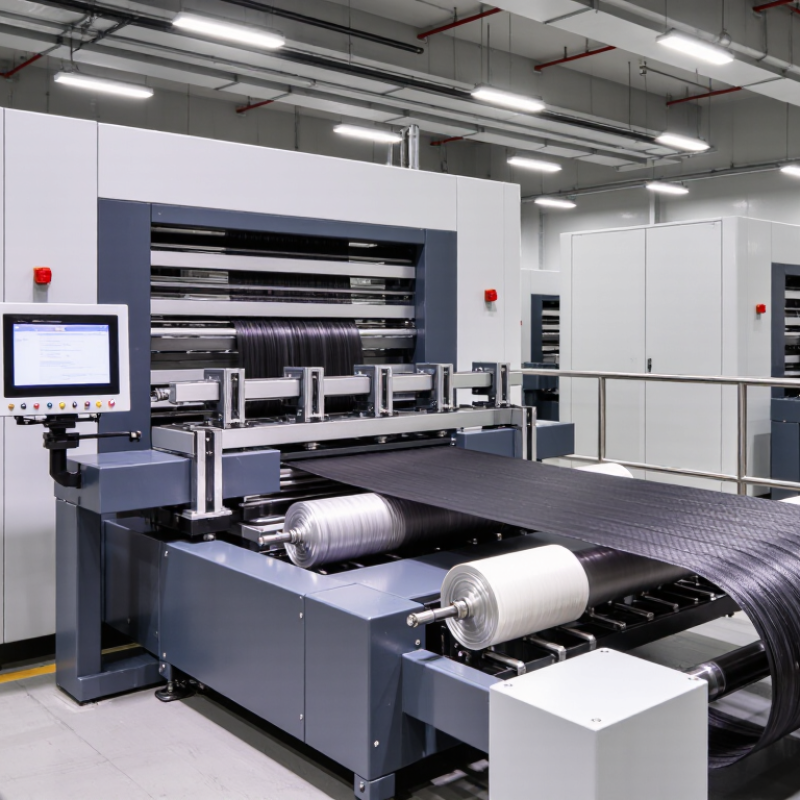
The best carbon fiber weaving machine from China is defined by measurable control, not a low quotation. In production, stable yarn tension matters more than headline speed. Uneven tension can create gaps, broken filaments, and costly roll rejection. A reliable machine should support precise warp and weft density, low vibration, quick pattern changes, and clear alarm records. Automatic tension correction is valuable, especially with brittle carbon yarns.

Market demand makes this choice more important. The International Energy Agency reported nearly 14 million electric cars sold worldwide in 2023. The Global Wind Report 2024 recorded 117 gigawatts of new wind capacity that year. These sectors increase demand for lightweight composite materials, but they also require consistent reinforcement fabrics. A suitable machine should therefore provide repeatable width, clean selvedges, and documented output at practical operating speeds. Ask for factory acceptance tests using your actual yarn specification.

Service quality defines the machine after installation. Check spare-part availability, remote diagnostics, operator training, and response times. Request production samples, energy readings, and failure statistics. ISO 9001 certification can support process reliability, but it does not prove weaving performance by itself. I would not trust a brochure alone. A perfect machine does not exist. Even an advanced system may struggle with inexperienced operators, humid storage, or unsuitable sizing. The strongest decision combines trial weaving, lifecycle cost, technical evidence, and honest limits.

Best Carbon Fiber Weaving Machine from China?

What Defines the Best Carbon Fiber Weaving Machine from China?

A strong carbon fiber weaving machine should handle multiple standard tow sizes while maintaining stable yarn tension, accurate shedding, consistent beat-up, and uniform fabric density. The chart shows the nominal filament count represented by common carbon fiber tow sizes used in woven reinforcement fabrics. Broader tow compatibility can improve production flexibility across lightweight and high-strength applications.

Key Machine Types for Different Carbon Fiber Fabric Structures

Best Carbon Fiber Weaving Machine from China?

Choosing a carbon fiber weaving machine starts with the required fabric structure, not the catalog price. Rapier looms suit plain, twill, and satin fabrics with controlled warp tension. They handle medium and heavy carbon tows with fewer abrupt impacts. For narrow tapes, needle looms offer stable edges and consistent width. Small details matter. Ceramic guides, low-friction tensioners, and clean yarn paths reduce filament damage during production.

Three-dimensional carbon fiber preforms require another approach. Jacquard-controlled looms can place yarns at different heights and create complex reinforcement shapes. These machines support thicker preforms for aerospace, pressure vessels, and structural parts. However, programming errors may cause uneven density or unwanted gaps. A careful trial is essential. Check thickness, yarn alignment, edge quality, and broken filaments after weaving.

Some factories also use multiaxial warp-knitting equipment for layered structures. It is not traditional weaving, but it can produce lightweight fabrics with strong directional control. When evaluating equipment from China, request a sample run using your actual tow size and resin process. Measure tension stability, machine vibration, dust collection, and operator access. A polished demonstration can hide maintenance difficulties. That is rarely enough. Review spare-part availability, training records, inspection data, and communication response before selecting a machine.

Essential Performance Features to Compare Before Choosing

Choosing the best carbon fiber weaving machine from China requires more than comparing purchase prices. MarketsandMarkets projects the global carbon fiber market to grow from about USD 4.7 billion in 2024 to USD 7.3 billion by 2029. That expansion increases pressure on stable, repeatable weaving performance.

Check the working width, insertion speed, and yarn tension range first. A machine should maintain even tension across the full beam, especially with brittle carbon tow. Look for closed-loop let-off, responsive take-up control, and automatic warp-break detection. These features reduce loose bands and stopped looms. The machine should also support the required tow size, from fine 1K yarn to heavier 24K material. Confirm this with actual production trials. Brochure figures can look impressive.

Energy use matters too. The International Energy Agency reports that industrial efficiency improvements remain essential for lowering manufacturing energy demand. Ask for measured power consumption at your target speed, not an idle figure. Inspect the shed-forming system, reed alignment, lubrication points, and operator access around the beam. A clear touchscreen helps, but simple manual controls still matter during faults. Sometimes, newer controls create slower troubleshooting.

Data logging is valuable. Record tension variation, stoppage frequency, fabric weight, and usable output per shift. CompositesWorld’s 2024 industry coverage highlights continuing growth in aerospace, automotive, and wind composite applications, where traceability and consistency are increasingly important. I would not choose the fastest machine automatically. A slightly slower loom with fewer broken filaments may produce more sellable fabric. That judgment needs plant-specific testing.

How Chinese Manufacturers Ensure Quality and Production Reliability

Best Carbon Fiber Weaving Machine from China?

Reliable carbon fiber weaving depends on more than machine speed. Experienced Chinese manufacturers control yarn tension, frame alignment, and temperature during production. A stable machine should handle carbon tow without sudden breaks or uneven edges. Technicians often inspect guide rollers, heddles, and take-up systems before final testing. Small mechanical errors can create visible defects in the finished fabric.

Quality assurance usually begins with incoming material checks. Manufacturers may measure roller hardness, motor performance, and sensor accuracy. They also run sample weaving under different widths and speeds. Production records should identify key components, testing dates, and maintenance actions. This traceability supports faster troubleshooting. However, factory claims are not enough. Buyers should review test videos, inspection reports, and actual sample fabric. A machine may look impressive, yet perform poorly after several continuous hours. That risk deserves attention.

Tips: Ask for a multi-hour trial using your intended carbon tow. Check tension variation, noise, fabric width, and stop-response time. Request spare-part lists and operator training details. Visit the workshop if possible. Look for clean wiring, organized assembly areas, and technicians who explain weaknesses honestly. My own review would not stop at the first successful sample. Repeated testing reveals more. Even reliable equipment can need adjustment after installation, especially when local humidity, power stability, or yarn specifications differ.

Steps for Selecting, Customizing, and Purchasing the Right Machine

Best Carbon Fiber Weaving Machine from China?

Selecting the right carbon fiber weaving machine starts with your material, not the catalog. Define tow size, yarn count, fabric width, pick density, and required production speed. A machine for 3K yarn may not handle heavier 12K tow smoothly. Ask the supplier for running samples using your actual carbon fiber. Inspect edge stability, broken filaments, tension consistency, and surface uniformity. Small defects become expensive during lamination.

Customization should follow measured production needs. Discuss beam capacity, tension control, electronic let-off, take-up accuracy, and fabric inspection systems. Confirm whether the machine supports your weave patterns, such as plain, twill, or multiaxial structures. Request drawings before manufacturing. Check electrical standards, operator access, guarding, and maintenance space. Keep the design practical. Extra features can increase downtime if technicians rarely use them.

Purchasing requires more than comparing prices. Review the supplier’s technical records, quality procedures, factory testing process, and export experience. Require a written specification, acceptance criteria, spare-parts list, installation scope, and training plan. A remote video inspection helps, but an independent factory visit is stronger. Include sample approval before final payment. My first specification was too general, and the delivered tension range created avoidable adjustments. That mistake changed my process: every critical requirement now has a test method and a signed record. Confirm lead time carefully, especially for customized components. Ask how service requests are handled after installation. Reliable support matters when production stops.