

What Are the Top Types of Textile Weaving?
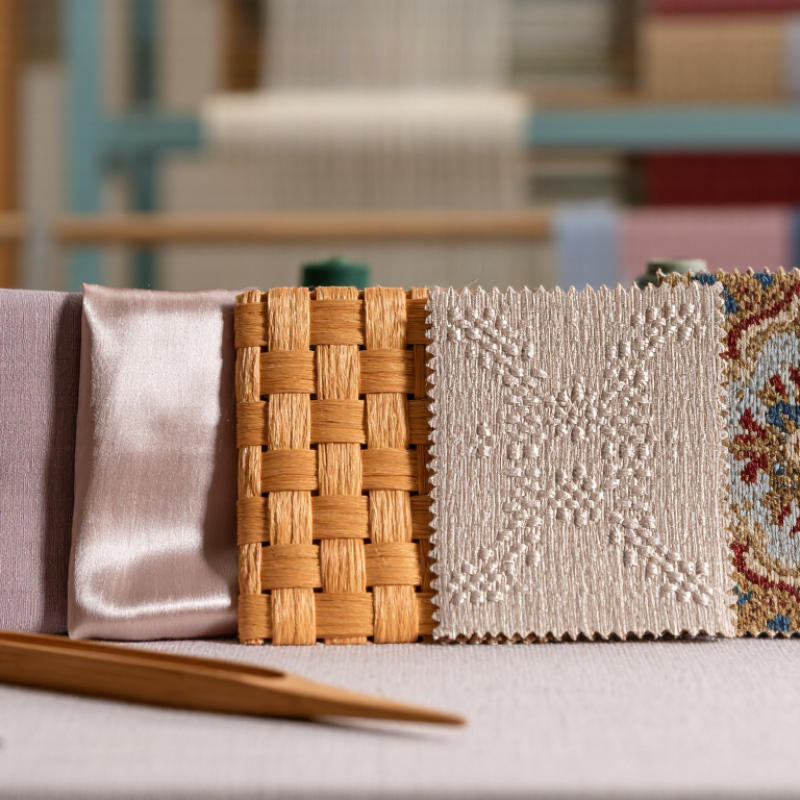
Textile weaving turns separate yarns into cloth through a deliberate crossing of lengthwise warp and crosswise weft. That simple structure supports remarkable variety. Plain weave creates a firm, balanced surface; twill forms diagonal ribs; satin produces a smoother face with longer yarn floats. Basket, dobby, and jacquard constructions add further options for texture and pattern. The differences are visible in a crisp shirt, the ridges of denim, or the sheen of a dress fabric.
The scale of textile production makes these choices consequential. Textile Exchange’s Materials Market Report 2024 estimated that global fibre production reached 124 million tonnes in 2023, with further growth projected. Fibre production is not the same as woven-fabric output, but it shows the size of the material system that weaving serves. As textile artist and educator Anni Albers wrote, “The material, the thread, is the means of expression.” Her observation points to a practical truth: yarn, weave structure, and finishing all shape a fabric’s performance and feel. Still, weave names alone do not tell the whole story. Fibre type, yarn density, and finishing can change the result substantially. This guide compares the top types of textile weaving, their defining structures, and where each works well. Some trade-offs are less obvious. A smooth surface may snag more easily, while a durable weave can feel heavier than expected.
The Basic Structure of Textile Weaving
What Are the Top Types of Textile Weaving?
The Basic Structure of Textile Weaving
Woven fabric is built by crossing two sets of yarns at right angles. Lengthwise yarns are called warp; crosswise yarns are called weft. The warp is held under tension on a loom, while the weft passes over and under it. That repeated crossing forms a stable cloth. Small changes matter.
In plain weave, each weft yarn alternates over and under neighboring warp yarns. The surface often looks like a tiny checkerboard, as on a lightweight cotton shirt. Twill shifts the crossing points, creating diagonal ribs that you can feel with a fingertip. Satin uses longer floats, where yarns pass over several others before interlacing. This gives a smoother face, but can leave threads more exposed to snags.
The pattern is only part of the structure. Yarn thickness, spacing, and tension affect how firm or flexible the finished cloth feels. When examining a sample, turn it over and look for the same crossings on the back. A magnifier can help reveal them. I find diagrams useful, though they can make weaving look more regular than it is. Real yarns vary slightly, and that unevenness is sometimes part of the fabric’s character.
What Are the Top Types of Textile Weaving? - The Basic Structure of Textile Weaving
| Weave Type | Basic Interlacing Structure | Typical Appearance and Characteristics | Common Uses |
|---|---|---|---|
| Plain Weave | Each weft yarn passes alternately over and under successive warp yarns; the pattern repeats every two yarns in both directions. | A simple, balanced structure with a relatively firm surface. It is generally stable and has little stretch from the weave alone. | Shirting, sheets, canvas, and many lightweight or everyday fabrics. |
| Twill Weave | Each weft yarn passes over and under warp yarns in a staggered sequence, creating diagonal lines on the fabric surface. | The diagonal ribs distinguish twill. It often drapes more easily than a comparable plain weave and can conceal minor marks. | Denim, chinos, workwear, suiting, and some upholstery fabrics. |
| Satin Weave | Long yarn floats are arranged so that warp or weft yarns pass over several yarns before interlacing; interlacing points are spread apart. | A smooth, lustrous face with fewer visible interruptions. Long floats can snag more easily than the compact structure of plain weave. | Eveningwear, linings, bedding, and decorative fabrics. |
| Basket Weave | Two or more warp yarns interlace together with two or more weft yarns in a repeating plain-weave variation. | Produces a visible block-like texture. The grouped yarns can make the fabric flexible, though it may be less firm than a comparable plain weave. | Shirting, lightweight jackets, upholstery, and decorative textiles. |
| Rib Weave | A plain-weave variation that uses differences in yarn size or spacing to emphasize ribs in the warp or weft direction. | Has a pronounced ridged texture in one direction; the exact appearance depends on yarn thickness and weave density. | Poplin, faille, ribbed shirting, and other textured fabrics. |
| Herringbone Twill | A twill structure in which the direction of the diagonal twill lines reverses at regular intervals. | Forms a distinctive broken zigzag pattern while retaining the characteristic texture of twill. | Coatings, suits, jackets, and furnishing fabrics. |
| Leno Weave | Warp yarns cross around adjacent warp yarns as the weft is inserted, helping hold the open structure in place. | An airy, mesh-like fabric with spaces between yarns; the crossed warps help reduce yarn slippage. | Lightweight curtains, gauze, nets, and some technical textiles. |
| Pile Weave | Additional yarns form loops or cut ends that project above a ground weave, creating a raised surface. | Has a soft or textured pile. It may be made with loops left intact or cut to produce a more velvety surface. | Towels, velvet, corduroy, carpets, and plush fabrics. |
Related Posts
-
What Is Textile Weaving and How Does It Work?
-

What Is the Best Textile Weaving Machine in China?
-
Top 10 Textile Weaving Manufacturers for Global Buyers
-
How to Find Top Cloth Weaving Manufacturers in China?
-

2026 Top Weaving Machine Innovations and Trends to Watch?
-
2026 Best Weaving Fabric Machine for Your Textile Production Needs?