
Top Towel Weaving Machines for Global Buyers 2026
A towel weaving machine is not just a loom with terry settings. It must form stable pile loops, manage ground and pile yarns, and keep fabric width consistent at production speed. For global buyers, those details affect towel softness, absorbency, waste, and delivery schedules. Small settings matter.
“[Insert a verified quotation from a named towel-weaving expert about pile control, fabric quality, or production efficiency.]” A documented expert comment can help readers assess the claims that follow. It should be checked against a reliable interview, publication, or company source before publication.
This 2026 guide compares machines through practical buying criteria: weaving width, operating speed, pile-height control, automation, energy use, and service support. It also considers the realities on a factory floor. How quickly can operators change a design? Are spare parts accessible across borders? Can the machine handle the buyer’s yarn and target towel weight without unstable loops?
Specifications tell only part of the story. A fast loom may still disappoint if setup is difficult or local maintenance is unavailable. Buyers should request fabric samples, confirm test conditions, and discuss expected output with suppliers. Ask for evidence. Then check the details.
The right towel weaving machine depends on product mix, workforce skills, and production goals—not a headline speed alone. This overview offers a grounded starting point, though each factory must test its own assumptions. One detail is easy to overlook: a sample run may not reflect a full production shift.
Understanding Towel Weaving Machines and Their Core Functions
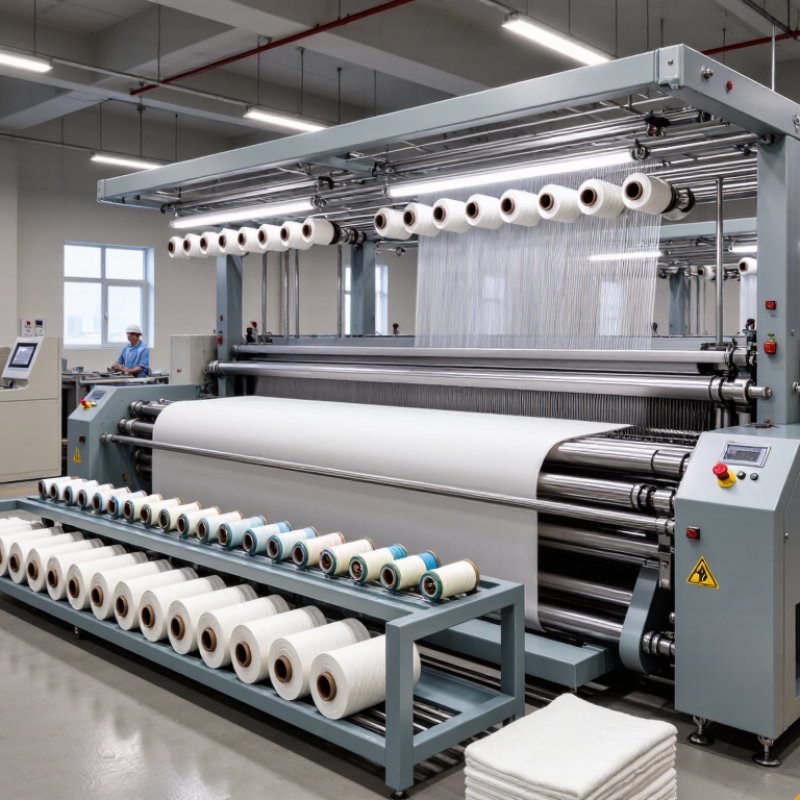
Towel weaving machines convert prepared yarn into absorbent fabric through controlled interlacing. Their key task is not merely producing loops. They must manage ground warp, pile warp, weft insertion, and fabric tension together. In a typical production room, the machine raises selected warp threads, inserts a pick, and forms pile loops at programmed heights. Small timing errors can create crushed loops or uneven edges. From practical mill observations, stable tension matters as much as headline speed. That detail is often underestimated.
Core functions usually include shedding, picking, beat-up, pile formation, take-up, and warp let-off. Shedding separates warp yarns for each weft insertion. Picking places the weft across the open shed. Beat-up presses it into the fell, building fabric density. Pile control creates the raised surface that gives towels their softness and drying ability. Take-up controls finished length, while let-off maintains steady warp supply. Operators also watch sensors, stop motions, and lubrication points during every shift. A clean lint path helps prevent false stops.
For global buyers in 2026, evaluation should begin with towel specifications, not machine speed alone. Check loop height range, usable width, yarn compatibility, energy demand, and operator access. Ask for fabric samples made under comparable settings. A specification sheet can look impressive. Production evidence is better. I would also inspect changeover time and spare-part availability in the destination market. Some machines promise simple operation, yet training can still be demanding. That weakness deserves honest planning.
Main Towel Loom Types Available to Global Buyers in 2026
For global buyers in 2026, towel loom selection begins with fabric structure, not machine speed. Terry towel looms form loops through controlled pile movement, creating absorbent bath towels, hand towels, and hotel textiles. Modern models may use electronic pile control, servo-driven beat-up, and automatic tension monitoring. These features help maintain loop height across wide fabric widths. They also increase the need for skilled setup. Small errors show quickly.
Air-jet terry looms suit mills seeking high output and consistent production. They use air to insert yarn, reducing mechanical contact during weaving. Their strengths include fast operation, clean floor layouts, and strong repeatability with stable yarn. However, compressed-air demand can raise operating costs in regions with expensive energy. Rapier terry looms offer more flexibility for heavier yarns, varied designs, and smaller production batches. They are often easier to adapt when buyers produce several towel specifications. Their slower insertion speed may be acceptable where versatility matters more than maximum volume. Speed is not everything.
Jacquard towel looms create detailed borders, logos, relief patterns, and complex motifs. Dobby-equipped systems handle simpler geometric effects with lower pattern complexity. Buyers should compare actual samples, not brochures. Check pile clarity, selvedge stability, yarn waste, noise, spare-part access, and operator training. Regional humidity also matters because cotton yarn behavior changes with moisture. A machine that performs well in a dry showroom may struggle beside a humid finishing line. This point is easy to underestimate. Total cost includes utilities, maintenance, downtime, and rejected towels. Early calculations can be wrong. A trial using the buyer’s own yarns offers more reliable evidence than headline speed.
Key Specifications That Shape Towel Quality and Production
Top Towel Weaving Machines for Global Buyers 2026
Key Specifications That Shape Towel Quality and Production
Machine selection should begin with fabric engineering, not advertised speed. Reed density controls ground-fabric compactness and loop distribution. Picks per centimetre influence absorbency, weight, and visual coverage. A 2024 Textile Exchange Materials Market Report estimated global fibre production at 124 million tonnes in 2023, with cotton representing roughly 22%. This keeps cotton towel performance commercially important.
For terry fabrics, buyers should inspect pile-height control, warp-tension stability, and beat-up accuracy. Small tension changes can create uneven loops or harsh stripes across a bath towel. Variable-speed drives help operators reduce damage during style changes. Wider working widths support hospitality orders, but they can increase alignment problems. More width is not automatically better.
The ITMF International Textile Machinery Shipment Statistics 2023 showed continued investment in shuttleless weaving equipment, despite uneven regional demand. Ask for measured output, not only maximum speed. A useful trial should record picks, fabric weight, loop height, stoppage frequency, and waste percentage. Test samples under ISO 6330 laundering conditions when possible. The weak point is often overlooked: operators may adjust tension by feel, producing inconsistent batches. Digital monitoring helps, but it cannot correct poor yarn preparation. One practical detail matters. Inspect the first and last metres.
| Machine Configuration | Typical Working Width | Weft Insertion System | Typical Operating Speed* | Terry Formation & Design | Suitable Towel Applications | Key Quality Considerations | Buyer Checks |
|---|---|---|---|---|---|---|---|
| Air-jet terry loom with electronic terry motion | Commonly available in widths around 190–360 cm; confirm usable fabric width and selvedge allowance. | Compressed-air nozzles carry the weft yarn across the shed. | Often configured for several hundred picks per minute; actual speed depends on width, yarn, construction, and mill conditions. | Electronic control can support adjustable pile formation and repeatable ground-to-pile spacing. Dobby or jacquard equipment may be added for patterns. | High-volume bath towels, hand towels, and other cotton or cotton-blend terry fabrics. | Air pressure and nozzle settings affect weft insertion reliability. Stable terry motion and controlled warp tension help maintain even pile loops. | Check air consumption, compressor capacity, energy use, yarn range, terry-control settings, and the supplier’s speed data for the intended construction. |
| Rapier terry loom with electronic terry motion | Available in multiple widths; select according to finished product width, loom layout, and fabric plan. | Rapiers mechanically transfer the weft across the shed. | Typically operated at lower speeds than high-output air-jet configurations; achievable speed varies by width and fabric design. | Can handle a broad range of yarn types and design requirements. Dobby and jacquard options can produce decorative borders and patterned designs. | Specialty towels, patterned terry, smaller production runs, and fabrics requiring flexibility in yarn or design. | Weft transfer and take-up stability influence pick consistency. Correct pile tension and terry timing are important for uniform loops. | Review rapier type, maintenance access, spare-part availability, yarn compatibility, patterning options, and trial results using the planned yarns. |
| Air-jet terry loom with dobby patterning | Selected to match the required fabric width and production layout; width options differ by configuration. | Compressed-air weft insertion with dobby-controlled ground-weave patterns. | Dependent on loom width, number of picks, yarn characteristics, and pattern complexity. | Suitable for repeated geometric effects and structured ground patterns; pile formation remains controlled by the terry mechanism. | Decorative towels and coordinated towel ranges needing repeatable woven patterns. | Pattern repeat, ground construction, pile coverage, and color changes should be assessed together to avoid unwanted differences in appearance or density. | Confirm dobby capacity, pattern repeat limits, electronic controls, pattern preparation workflow, and achievable output for the target design. |
| Jacquard terry loom configuration | Choose a width suited to the design repeat and the number of towel panels produced across the loom. | Usually paired with an air-jet or rapier insertion system, depending on the selected loom configuration. | Design complexity and jacquard setup can affect practical output; compare performance using the actual production pattern. | Individual warp-end control enables more intricate motifs and larger design possibilities than standard dobby patterning. | Premium towels, logo-style woven motifs, and products requiring complex or customized patterns. | Motif definition depends on jacquard resolution, warp planning, pile placement, and consistent tension across the width. | Check jacquard capacity, design software compatibility, service support, setup time, and sample quality at the intended fabric density. |
| Electronic terry loom for multi-pick constructions | Width is selected for the planned product mix and the number of fabric panels woven side by side. | Air-jet or rapier insertion; the appropriate system depends on yarns, width, and production priorities. | Must be evaluated against the selected pick sequence and fabric construction rather than a headline speed alone. | Electronic terry control supports adjustment of pile and ground relationships. Multi-pick designs can be used to create different towel structures. | Product ranges that include varied textures, weights, or construction requirements. | Consistent pile height, balanced ground and pile yarn consumption, and stable take-up help maintain fabric weight and appearance. | Request fabric trials for each construction, and verify control flexibility, recipe storage, changeover time, and production data reporting. |
*Operating speeds and width ranges are indicative buying-guide information, not guaranteed machine ratings. Actual performance varies with loom design, fabric width, yarn count and quality, pick density, pile height, pattern, operator skill, and mill conditions. Confirm specifications and production trials with the equipment supplier before purchase.
How to Compare Leading Towel Weaving Machines for Different Needs
Top Towel Weaving Machines for Global Buyers 2026
Comparing towel weaving machines starts with the fabric, not the machine’s advertised speed. A hotel bath towel may require dense loops, stable edges, and a soft hand feel. Beach towels often need wider construction and brighter pattern control. Check the target weight, loop height, fabric width, and yarn type before reviewing technical specifications. Small differences matter.
Ask suppliers for trial fabric made with your own yarn. Measure fabric weight after washing, not only before production. Inspect the selvage, loop uniformity, and reverse-side appearance under strong light. A practical comparison should include production speed, stopping frequency, air or power consumption, and changeover time. Faster operation can become expensive when workers spend hours correcting broken loops.
Control systems also deserve careful attention. Clear settings, fault records, and accessible maintenance points reduce training pressure. Ask how quickly common parts can be replaced and whether remote technical support is available in your region. I have found that a machine with slightly lower output may deliver better results when adjustments are simple. My own comparison method is not perfect; test conditions, operator skill, and yarn quality can distort results. Keep identical samples and record every setting. Real evidence is more useful than impressive numbers.
Top Towel Weaving Machines for Global Buyers 2026
How to Compare Leading Towel Weaving Machines for Different Needs
The chart compares typical working-speed ranges reported for towel weaving applications. Narrow and lighter towel constructions generally support higher loom speeds, while wide, high-pile, or more complex constructions usually require slower settings for stable fabric quality. Actual performance depends on towel width, pile height, yarn type, density, pattern complexity, and machine configuration.
Indicative benchmark ranges in revolutions per minute (rpm), synthesized from commonly published technical specifications for industrial towel weaving equipment. They are intended for initial comparison rather than guaranteed production output.
Global Buying Factors: Cost, Automation, Support, and Compliance
Top Towel Weaving Machines for Global Buyers 2026
For global buyers, the lowest machine price rarely means the lowest operating cost. A reliable evaluation includes installation, energy use, spare parts, training, and expected downtime. Ask for fabric samples made with your yarn and towel specifications. Check production speed under realistic conditions, not only brochure figures. Automation can reduce operator errors through recipe storage, tension control, and automatic stop functions. However, advanced controls may require skilled technicians and more expensive replacement parts.
Supplier support often decides whether a machine earns money or waits for service. Request response times, troubleshooting procedures, spare-parts availability, and technician training. A clear warranty matters, but practical support matters more. Ask who handles commissioning at your location. Some suppliers promise remote assistance, yet weak internet or language barriers can slow repairs. Our cost models are never perfect; local wages and shipping delays can change the result.
Tips: Compare total ownership cost over five years, not just the invoice. Confirm electrical requirements, machine guarding, noise limits, and documentation for your destination market. Check applicable safety and conformity requirements before payment. Keep written records of promised speed, output quality, delivery dates, and training hours. Visit an operating factory if possible. A short inspection can reveal vibration, uneven edges, or difficult cleaning points.
Related Posts
-
2026 Top Terry Towel Weaving Machine Innovations and Trends?
-

10 Essential Tips for Choosing the Best Weaving Looms for Beginners
-
How to Choose the Best Carbon Weaving Machine for Your Needs?
-
What Is the Best Textile Weaving Machine in China?
-

Top 10 Weaving Machines for Home Use in China
-
Top 10 Benefits of Terry Towels for Everyday Use?