10 Best Terry Towels for Global Wholesale Buyers?

Global wholesale buyers are rethinking the humble terry towel. Price still matters, but absorbency, drying speed, fabric weight, and supply consistency now influence every purchase. A towel that feels soft in a showroom may lose shape after repeated commercial washing. That difference can damage customer trust and increase replacement costs.

The 2024 Textile Exchange Materials Market Report estimates that global fiber production reached 124 million tonnes in 2023. It also projects continued growth toward 2030. This expansion increases pressure on buyers to examine fiber origin, processing, and environmental claims. Cotton remains widely used in towel manufacturing, yet recycled fibers, organic cotton, and blended constructions deserve careful comparison. Claims need evidence.

Our review of the 10 best terry towel options focuses on practical wholesale conditions. We consider GSM, yarn type, loop construction, border stitching, colorfastness, shrinkage, and carton efficiency. We also examine supplier experience, sampling discipline, and documentation. Certifications such as GOTS and OEKO-TEX can support responsible decisions, but neither replaces independent quality inspection.

Some rankings remain subjective. A 700 GSM towel is not automatically better than a 500 GSM towel. It may absorb more water, but it can dry slowly in humid hotels. Small details matter. A reinforced corner, consistent sizing, and clear care labeling can prevent expensive complaints.

Wholesale sourcing is rarely perfect. Samples may not represent every production batch. Buyers should test washing performance before signing large contracts. This guide offers a practical starting point, supported by industry data and measurable quality factors.
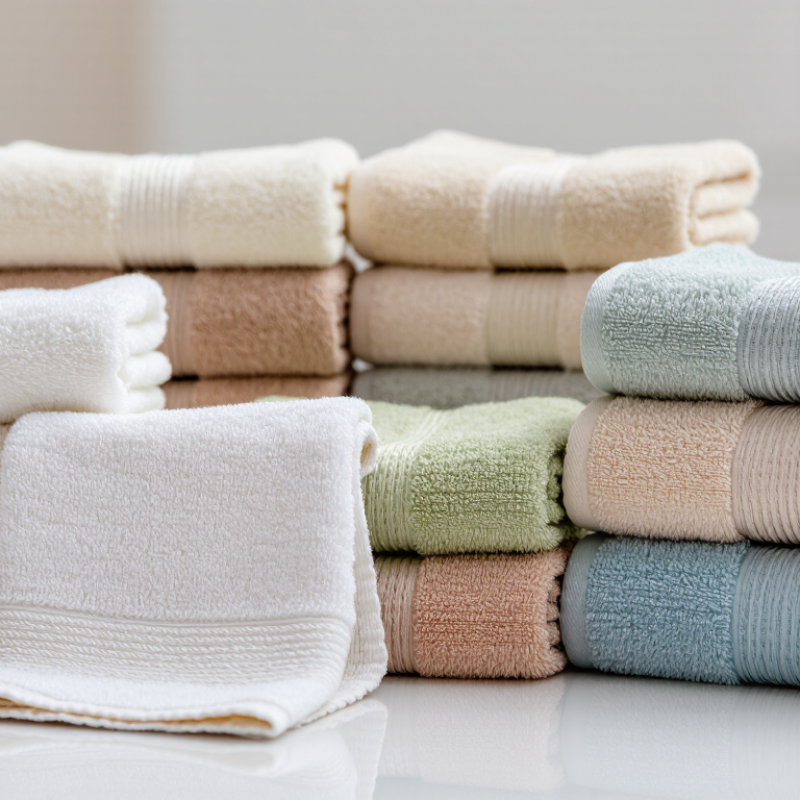
10 Best Terry Towels for Global Wholesale Buyers?

Terry Towel Basics: Materials, Weaves, Sizes, and Absorbency

Terry towels are built around looped pile, which creates surface area for water capture. Cotton remains a practical choice because its cellulose fibers attract moisture. Recycled polyester can improve durability, but it usually absorbs less water. Textile Exchange’s Materials Market Report 2024 estimates global fiber production reached 124 million tonnes in 2023, with cotton representing about 22%. Material selection therefore affects both performance and sourcing decisions.

Weave structure matters. A dense, low-loop towel dries faster, while taller loops feel softer and hold more water. Higher GSM often increases absorbency, but it also raises drying time, freight weight, and purchase cost. Common wholesale sizes include 30 × 30 cm washcloths, 50 × 100 cm hand towels, and 70 × 140 cm bath towels. These dimensions should match hotel rooms, gyms, salons, or household use. Small details matter.

AATCC TM79 testing measures absorbency by recording how quickly fabric wets. Buyers should request test results, GSM records, colorfastness data, and shrinkage limits. USDA’s Cotton: World Markets and Trade report forecast roughly 116.9 million 480-pound bales of global cotton production for 2024/25. That scale does not guarantee consistent towel quality. It is easy to overvalue softness during sampling. I would test a washed towel under real-use conditions, not only inspect it fresh from packaging.

How to Compare the 10 Best Terry Towels for Wholesale Purchasing

Comparing the 10 best terry towels for wholesale purchasing requires more than checking softness. In my sourcing experience, GSM is a useful starting point. Towels between 450 and 650 GSM often balance absorbency, drying speed, and shipping weight. Heavier is not always better. A dense towel may dry slowly in humid storage rooms.

Inspect the loops closely. Even, upright loops usually absorb water more consistently. Pulling one loop gently can reveal weak weaving. Check the towel’s dimensions after washing, not only before washing. A 70-by-140-centimeter towel may shrink noticeably. Ask for sample washing data and compare shrinkage across all ten options. Small differences become expensive in large orders.

Colorfastness, edge stitching, and lint release also deserve practical testing. Rub a dark towel against a white cloth after washing. Then examine the hem after repeated tumble drying. Cotton composition should be confirmed through reliable documentation, not casual supplier claims. I would also compare packing methods, carton strength, lead times, and replacement procedures. These details affect warehouse handling. They are easy to ignore.

A scoring sheet helps. Use categories such as absorbency, durability, size stability, appearance, cost, and delivery reliability. Give each category a suitable weight for the intended market. My own mistake was giving price too much influence. The cheapest towel created more lint and complaints later. Samples can mislead, too, because production batches may vary. Request batch-level checks before approving a wholesale order.

10 Best Terry Towels for Global Wholesale Buyers? - How to Compare the 10 Best Terry Towels for Wholesale Purchasing
Rank Terry Towel Type Recommended Wholesale Use Typical Size Typical GSM Common Fiber Content Construction Absorbency Drying Speed Key Purchasing Advantage
1 Ring-Spun Cotton Bath Towel 70 × 140 cm 550–650 GSM 100% cotton Double-sided terry loops with reinforced hems ★★★★★ High Medium Balanced softness, durability, absorbency, and broad international appeal
2 Combed Cotton Bath Towel 70 × 140 cm 600–700 GSM 100% combed cotton Dense terry pile with neatly finished edges ★★★★★ High Medium Smoother hand feel and consistent appearance after repeated washing
3 Turkish-Style Terry Bath Towel 70 × 140 cm 450–600 GSM 100% cotton Long-loop terry construction with decorative dobby borders ★★★★☆ High Medium-Fast Offers a lighter premium towel profile with good packability
4 Low-GSM Hotel Bath Towel 70 × 140 cm 400–500 GSM 100% cotton or cotton-rich blend Shorter terry loops with reinforced side and end hems ★★★★☆ Good Fast Lower shipping weight, faster laundering, and efficient replacement cost
5 Zero-Twist Cotton Towel 70 × 140 cm 600–750 GSM 100% cotton Low-twist or zero-twist yarn with lofty terry loops ★★★★★ Very high Slow-Medium Very soft and plush, with a strong premium presentation
6 Cotton-Polyester Terry Towel 50 × 100 cm 350–500 GSM Typically 60–80% cotton and 20–40% polyester Mixed-fiber terry with durable woven hems ★★★☆☆ Moderate-Good Fast Improved dimensional stability and lower cost than all-cotton options
7 Microfiber Terry Towel 40 × 60 cm 300–500 GSM Usually polyester and polyamide microfiber Fine synthetic terry loops with overlocked or laser-cut edges ★★★★☆ Good Very Fast Lightweight, compact, quick-drying, and suitable for frequent transport
8 Bamboo-Cotton Terry Towel 70 × 140 cm 500–650 GSM Commonly 50–70% cotton with 30–50% bamboo viscose Soft blended terry with reinforced dobby or plain hems ★★★★☆ High Medium Soft drape and sustainability-oriented product positioning
9 Waffle-Terry Reversible Towel 70 × 140 cm 350–500 GSM 100% cotton or cotton-rich blend One waffle-textured face and one terry-loop face ★★★★☆ Good Fast Distinctive texture, reduced bulk, and faster drying than plush towels
10 Compressive Sports Terry Towel 30 × 100 cm 350–450 GSM 100% cotton or cotton-polyester blend Compact terry pile with narrow reinforced hems ★★★☆☆ Moderate-Good Fast Compact size, manageable shipping volume, and strong institutional demand

Key Quality Standards for Durable and Consistent Terry Towels

10 Best Terry Towels for Global Wholesale Buyers?

Key Quality Standards for Durable and Consistent Terry Towels

Terry towel quality starts with measurable construction, not attractive samples. Textile Exchange’s 2024 Materials Market Report estimates global fiber production reached 124 million tonnes in 2023. Cotton represented roughly one-fifth of that volume, making fiber selection important for large-scale purchasing. Buyers should verify cotton content, yarn type, GSM, pile height, and loop density before approval. ISO 3801 provides a recognized method for measuring fabric mass per unit area.

Check the details.

A durable towel should absorb water quickly without excessive linting. Test absorbency after washing, not only in new condition. ISO 6330 supports standardized domestic laundering procedures, while ISO 105-C06 evaluates colorfastness to commercial washing. These tests help compare suppliers fairly across countries. In sourcing audits, uneven hems, loose loops, and inconsistent GSM often reveal weak process control. Small defects become expensive after thousands of pieces.

Shrinkage also needs written limits. A supplier may report excellent results from one sample, yet bulk production can behave differently. Require pre-production, inline, and final inspections. Record dimensions before and after washing. Review seam strength, shade variation, odor, and packaging moisture. Some buyers focus too heavily on weight. Heavier is not always better; dense towels can dry slowly and increase logistics costs. Textile Exchange’s 2024 report also reinforces the need for traceable material claims, although documentation can still be incomplete. That weakness deserves scrutiny.

Matching Terry Towel Types to Hospitality, Spa, and Retail Needs

Terry towels should match the job, not merely look luxurious. In hospitality, choose medium-weight cotton towels with strong hems and fast drying. Bath towels around 500–650 GSM offer comfort without excessive laundry weight. Hand towels need tighter loops because repeated folding and handling create abrasion. A 2024 Grand View Research analysis identifies continued growth in the global bath towel market, driven partly by hospitality and household replacement demand.

Spas require a different balance. Guests expect softness, but dense towels can retain moisture and increase drying time. Combed cotton improves surface feel, while low-twist yarn creates a plush hand. Still, plushness is not everything. In busy treatment rooms, a slightly lighter towel may improve turnover. Textile Exchange’s 2024 Materials Market Report recorded global fiber production at about 124 million tonnes in 2023, with cotton representing roughly one-fifth. Buyers should therefore request fiber-origin details and test shrinkage before placing large orders.

Retail collections need visual consistency and packaging flexibility. Zero-twist towels attract shoppers with their softness, while ribbed or dobby borders add shelf appeal. Yet decorative borders may stiffen after repeated washing. That trade-off deserves testing. Wholesale samples should undergo at least five commercial wash cycles, checking lint, color change, edge curling, and absorbency. The best specification can still fail in a real laundry room. Ask for GSM tolerance, colorfastness results, and carton moisture protection before approval.

Wholesale Pricing, Customization, Packaging, and Supplier Evaluation

10 Best Terry Towels for Global Wholesale Buyers?

Wholesale buyers should compare more than the unit price. A 500 GSM cotton towel may feel plush, yet freight costs can reduce its margin. Request prices by size, weight, fiber content, minimum order quantity, and delivery term. Ask whether the quote includes labels, cartons, sampling, and inspection. A useful comparison sheet prevents attractive but incomplete offers.

Customization needs measurable details. Confirm dimensions, border width, color references, embroidery area, and towel shrinkage after washing. Reactive dyes usually support strong color performance, but buyers should request wash and colorfastness test results. Samples should match bulk production, not just look good in photographs.

A 30 by 60 inch towel, for example, needs stable weight and even loops across the entire surface. Small defects matter in hospitality orders.

Packaging also affects cost and presentation. Specify folding method, individual wrapping, carton quantity, carton strength, and shipping marks. Moisture protection is important during long ocean transit. Supplier evaluation should include factory capacity, production lead time, quality records, and communication speed. Request a pre-production sample and an independent inspection when order value is significant. I have seen low quotes fail after packaging and rework costs appeared. No checklist catches everything. Leave room for careful review.