
Top 10 Waffle Fabric Suppliers for Global Buyers

Waffle Fabric is moving beyond bathrobes and spa towels. Its raised grid, soft hand, and dependable absorbency now support apparel, home textiles, hotel supplies, and wellness products. For global buyers, supplier selection therefore requires more than attractive samples. It demands evidence.

Textile Exchange’s 2024 Materials Market Report estimated global fiber production at 124 million tonnes in 2023. It also projected continued growth toward 160 million tonnes by 2030. This expansion increases pressure on mills to document fiber content, recycled inputs, chemical controls, and production consistency. Grand View Research has also identified home textiles and technical fabric applications as important areas of textile market development. Waffle Fabric fits both spaces, but quality varies sharply.

Dr. Seshadri Ramkumar, a textile materials expert at Texas Tech University, often stresses practical performance over attractive claims. His frequently cited principle is: “Textiles must perform in the real world.” That point matters here. A waffle towel may look precise under showroom lighting, yet lose shape after repeated washing. A fabric may feel soft, but show weak colorfastness in commercial laundering.

This guide examines ten Waffle Fabric suppliers serving international buyers. It considers manufacturing experience, testing practices, certifications, customization, minimum order quantities, and export reliability. Some rankings remain imperfect because supplier data changes. Buyers should still request recent laboratory reports, production samples, and factory documentation before placing orders. Small checks prevent expensive surprises.
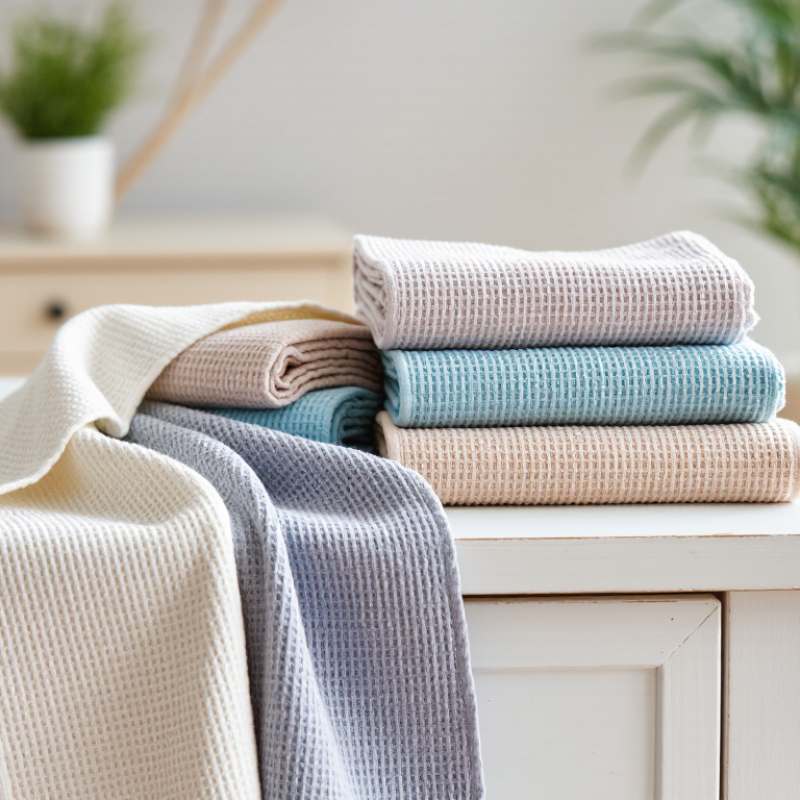
Top 10 Waffle Fabric Suppliers for Global Buyers

What Waffle Fabric Is and Why Global Buyers Use It

Waffle fabric is a knitted textile with raised square or honeycomb textures. Its surface creates small air pockets, improving warmth without adding heavy weight. The structure also increases absorbency, which explains its popularity in towels, robes, blankets, baby products, and casual apparel. It feels soft, but texture varies widely between mills.

Global buyers often choose waffle fabric for its balance of comfort, breathability, and visual depth. Cotton versions suit towels and clothing, while blended fibers can improve drying speed or shape retention. Weight matters. A light fabric may work for summer garments, but a dense construction is better for blankets or hotel robes. The wrong choice can feel rough after washing. I have seen samples that looked excellent but lost their texture after repeated laundering.

Reliable purchasing requires more than checking a color card. Buyers should review fiber content, fabric width, weight, shrinkage, colorfastness, and pilling results. Ask for laboratory reports when the product will contact skin or face strict import requirements. Inspect the fabric under natural light. Check loops, edges, holes, and uneven dyeing. Small flaws become obvious in large production runs. Fabric inspection is not glamorous. It prevents expensive surprises. Buyers should also test the finished product, because sewing, washing, and drying can change the final hand feel. Waffle fabric is useful, but it rewards careful evaluation rather than assumptions.

How to Define Supplier Selection Criteria for Waffle Fabric

Top 10 Waffle Fabric Suppliers for Global Buyers

How to Define Supplier Selection Criteria for Waffle Fabric

A practical supplier shortlist should begin with measurable fabric performance, not attractive photographs. Waffle texture depends on yarn count, loop depth, GSM, and finishing control. Request samples in the intended fiber blend and production width. Then record shrinkage after laundering at the target temperature. Samples expose reality.

Textile Exchange’s Materials Market Report 2024 estimates global fiber production reached 124 million metric tonnes in 2023, with growth toward 160 million tonnes by 2030. This scale makes traceability a serious selection criterion. Ask suppliers for fiber origin records, batch identification, recycled-content evidence, and valid transaction documents. Sustainability claims without supporting records deserve caution.

Technical approval should include GSM tolerance, dimensional stability, pilling, colorfastness, absorbency, and seam behavior. Independent testing under ISO methods can improve comparability, especially when laboratories operate under ISO/IEC 17025 accreditation. For production planning, evaluate minimum order quantity, sample lead time, bulk lead time, payment terms, and replacement procedures. A supplier should explain how failed rolls are quarantined. Paperwork is not performance.

My own selection matrix would assign separate scores for quality, reliability, compliance, and communication. However, scoring can hide practical problems. A supplier may pass laboratory tests but deliver a rougher handfeel in bulk. Approve a pilot order before ranking the final ten. Keep retained samples from every shipment. Small details matter.

Top 10 Waffle Fabric Suppliers for International Buyers

Top 10 Waffle Fabric Suppliers for International Buyers

International buyers need more than attractive waffle texture. They need stable GSM, repeatable shrinkage, accurate color, and export-ready documentation. Our top ten supplier shortlist should be assessed through these practical details, not catalog photographs alone.

A 2024 Textile Exchange report states that global fiber production reached 124 million tonnes in 2023 and may reach 160 million tonnes by 2030. This growth increases sourcing options, but it also makes traceability harder.

Supplier Evaluation Essentials

Reliable suppliers should provide fabric composition, width tolerance, washing instructions, and laboratory test results. Ask for a 30-by-30-centimeter sample before placing a bulk order. Check the surface after washing, especially around raised loops and edge seams.

International buyers should also review minimum order quantities, lead times, packing methods, and port experience. The International Trade Centre’s Trade Map supports comparing textile export flows, although trade statistics cannot fully measure service quality.

Quality, Testing, and Compliance

Look for recognized quality and environmental management certifications when they match your market requirements. Independent testing can verify colorfastness, pilling, dimensional stability, and harmful-substance limits. These checks protect buyers from costly returns.

Still, no ranking is perfect. A supplier with excellent machinery may communicate poorly, while a smaller mill may solve sampling issues faster. Price alone misleads. Waffle fabric can feel soft in a sample yet lose structure after repeated laundering. International purchasing teams should record every test result and negotiate clear remedies before production begins.

How to Compare Waffle Fabric Quality, Pricing, and Production Capacity

Top 10 Waffle Fabric Suppliers for Global Buyers

When comparing waffle fabric suppliers, inspect quality before discussing price. Ask for a dated sample with the same fiber blend, color, and width. Measure GSM, loop height, fabric width, and shrinkage after washing. Dense, even loops usually provide better absorbency and durability. However, heavier fabric does not always mean better performance. Some dense structures dry slowly.

Request test results for colorfastness, pilling, tear strength, and dimensional stability. Check the fabric under bright light for missing loops, loose yarns, and uneven edges. I also recommend washing the sample three times before approval. One wash can hide problems. A clear technical sheet makes supplier comparisons more reliable, although documents still need physical verification.

Pricing should include yarn, dyeing, finishing, packing, testing, and shipping terms. Compare the full landed cost, not only the quoted meter price. Ask about minimum order quantities, sample fees, payment stages, and production lead times. Capacity claims need evidence. Request monthly output, current machine utilization, and a realistic delivery schedule. A supplier producing ten thousand meters monthly may struggle with a sudden larger order. I once trusted an attractive quote without checking finishing capacity, and the delayed shipment erased the savings. No scorecard is perfect. Keep a small risk allowance for color approval, rework, and seasonal delays.

What Global Buyers Should Check Before Placing an Order

Top 10 Waffle Fabric Suppliers for Global Buyers

What Global Buyers Should Check Before Placing an Order

Choosing among the top waffle fabric suppliers requires more than comparing prices. Check the fabric composition, GSM, width, texture, and shrinkage rate. A cotton-polyester blend may feel stable, while pure cotton can shrink more after washing. Request a recent technical data sheet and a physical sample. Photos rarely show loop depth accurately. Ask whether the quoted width is usable or finished width. This small detail can affect cutting plans.

Tips: Confirm the MOQ, sample fee, production lead time, and payment terms in writing. Request a lab dip or approval sample before bulk production. Test colorfastness, pilling, tensile strength, and dimensional stability through an independent laboratory when the order is important. Also inspect packaging. Damp cartons can damage fabric before shipment. Certificates should match the actual factory and product, not merely appear on a sales file.

A reliable supplier should explain its quality-control process clearly. Ask for inspection points during knitting, dyeing, finishing, and packing. Verify production capacity against your required delivery window. Very low prices deserve careful questions. They may reflect lower GSM, mixed fiber content, or weaker inspection. No checklist is perfect. A sample can pass while bulk fabric varies slightly. Include tolerance ranges, replacement terms, and inspection rights in the purchase contract. Keep approved samples, test reports, and email records together. This creates a practical reference if shade, weight, or texture changes later.

Top 10 Waffle Fabric Suppliers for Global Buyers - What Global Buyers Should Check Before Placing an Order

Anonymous supplier benchmark profiles based on commonly traded waffle-fabric specifications and buyer due-diligence criteria. Figures are typical commercial ranges and should be verified with each supplier.

Rank Supplier Profile Typical Production Region Common Fiber Options Typical Fabric Weight Usual Width Typical MOQ Indicative Lead Time Relevant Compliance Evidence Checks Before Ordering
1 Large-scale knitted-fabric mill East and South Asia Cotton, recycled polyester, cotton blends 180–320 gsm 150–190 cm 300–1,000 kg per color 25–45 days after approval Valid scope certificate, restricted-substance testing, social-audit records Confirm shrinkage, GSM tolerance, colorfastness, and bulk-production capacity.
2 Organic-cotton specialist South Asia and Türkiye Certified organic cotton, conventional cotton 200–360 gsm 145–180 cm 200–600 kg per color 30–50 days Organic-fiber transaction records, chain-of-custody documents, chemical test reports Check certification scope, certificate validity, fiber percentages, and traceability.
3 Home-textile terry and waffle producer South Asia and the Mediterranean Combed cotton, linen-cotton blends, bamboo-viscose blends 220–450 gsm 150–220 cm 500–1,500 kg per style 35–60 days Absorbency testing, azo-dye screening, factory quality procedures Request absorbency, wash-durability, loop-pull, and dimensional-stability results.
4 Recycled-polyester performance mill East Asia and Southeast Asia Recycled polyester, polyester-elastane blends 140–260 gsm 155–200 cm 300–800 kg per color 25–45 days Recycled-content evidence, colorfastness reports, chemical-compliance testing Verify recycled input documentation, pilling performance, stretch recovery, and finish durability.
5 Low-MOQ sampling and custom-dyeing mill China, India, and Pakistan Cotton, polyester, rayon, blended yarns 160–300 gsm 145–190 cm 50–200 kg per color 20–40 days Color-lab-dip records, fabric inspection reports, applicable chemical testing Clarify small-order surcharges, shade tolerance, sample-to-bulk consistency, and payment terms.
6 European finishing and converting supplier Türkiye and Eastern Europe Cotton, linen blends, recycled fibers 190–380 gsm 150–210 cm 300–1,000 kg per construction 30–55 days Finishing specifications, safety testing, social and environmental documentation Review finish chemistry, hand-feel standards, edge quality, and export documentation.
7 Vertical knit-dye-finish manufacturer China, Vietnam, and Bangladesh Cotton, polyester, modal, blended yarns 170–340 gsm 155–205 cm 500–2,000 kg per order 35–60 days In-house inspection records, wastewater controls, restricted-substance tests Audit knitting, dyeing, finishing, and inspection stages; confirm replacement policy for defects.
8 Premium combed-cotton boutique mill Portugal, Türkiye, and South Asia Long-staple cotton, mercerized cotton, cotton-modal blends 180–300 gsm 140–180 cm 100–500 kg per color 30–55 days Fiber-content testing, colorfastness testing, quality-management documentation Assess surface smoothness, pilling, spirality, shade consistency, and premium-finish durability.
9 Sustainable blended-fiber supplier India, Southeast Asia, and Europe Organic cotton, recycled polyester, lyocell, linen blends 170–330 gsm 145–195 cm 200–800 kg per construction 35–65 days Material traceability, environmental-management evidence, chemical testing Validate every sustainability claim, blend ratio, recyclability statement, and care-label requirement.
10 Stock-supported wholesale fabric distributor North America, Europe, and Asia Cotton, polyester, viscose, mixed fibers 150–350 gsm 140–200 cm 10–100 kg per stock lot 3–20 business days from available stock Lot-specific composition and safety reports; origin and transaction records Confirm available lot quantity, roll length, shade continuity, origin, and return conditions.
Buyer checklist: Request a physical sample, technical specification sheet, fiber-composition report, GSM and width tolerances, shrinkage data, colorfastness results, pilling results, production timeline, packaging details, inspection procedure, payment terms, and written approval standards before placing a bulk order.