
What Are the Top Types of Pet Wet Wipes for Global Buyers?
Pet Wet Wipes are becoming a practical hygiene product for households, groomers, retailers, and veterinary channels worldwide. They help remove mud from paws, pollen from coats, and food residue around the mouth. The demand is closely connected to rising pet ownership and stronger humanisation trends. The American Pet Products Association reported that 66% of U.S. households owned a pet in 2023, representing about 86.9 million homes. Its 2023–2024 National Pet Owners Survey also recorded substantial spending across food, veterinary care, and everyday supplies. These figures do not describe every country, but they show why convenient pet-care formats attract global buyers.
This guide examines the leading types of Pet Wet Wipes, including grooming wipes, paw wipes, ear wipes, eye-area wipes, deodorising wipes, and sensitive-skin formulas. Grand View Research’s pet wipes market analysis identifies personal hygiene and cleaning applications as important product segments, while Euromonitor International’s pet-care reports continue to highlight premiumisation and wellness-oriented purchasing. Yet the category is not as tidy as a product chart suggests. A “natural” label does not automatically mean safer skin contact. Buyers should inspect ingredient transparency, fragrance levels, fabric softness, moisture retention, resealable packaging, and manufacturing consistency. They should also confirm that product claims match the regulations of each target market.
Small details matter. A sturdy lid can prevent a pack from drying during shipping. A soft, textured sheet may clean muddy paws without excessive rubbing. However, no single wipe suits every animal. Breed, coat type, allergies, age, and intended use can change the purchasing decision. This overview therefore compares product functions, material choices, safety considerations, and commercial value, helping international buyers make more evidence-based decisions.
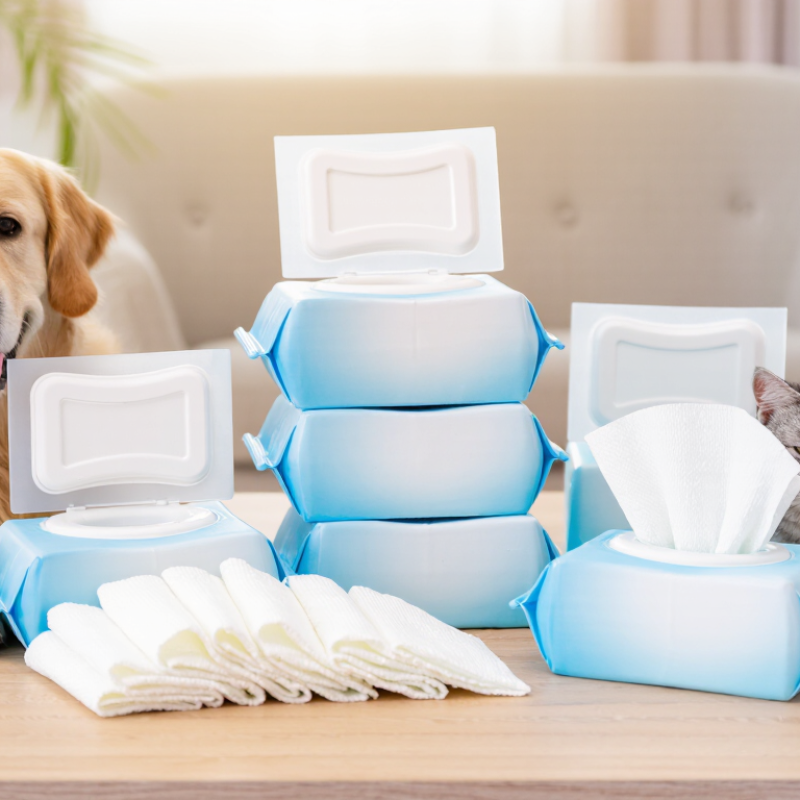
What Are Pet Wet Wipes and Why Do Global Buyers Need Them?
Pet wet wipes are pre-moistened sheets designed for quick cleaning between baths. They commonly remove dirt, pollen, mud, and surface oils from fur, paws, skin folds, or other sensitive areas. For global buyers, they offer a practical solution when water, grooming facilities, or travel time are limited. A small pack fits easily beside a leash or inside a vehicle.
Different pets need different wipe types. Paw wipes should handle outdoor grit without leaving a slippery residue. Coat-cleaning wipes need a soft texture and enough moisture for larger areas. Ear-area wipes require careful wording and should not replace veterinary treatment. Unscented options may suit pets with sensitive skin, while fragrance-free formulas can reduce unnecessary exposure. Not every wipe suits every pet.
Experienced buyers should check the material, moisture level, pH information, packaging seal, and ingredient transparency. Clear use directions matter, especially for international distribution. The sheet should stay intact during wiping and should not shed fibers around eyes or mouths. Buyers can also request stability and microbial testing documents from suppliers. A pleasant scent may attract customers, but it does not prove safety. A wipe may feel soft and still cause irritation. Small trial orders help reveal real performance before larger purchases.
Which Pet Wet Wipe Types Are Available for Different Cleaning Needs?
Pet wet wipes vary by cleaning purpose, and the right type depends on where and how often it is used. Daily grooming wipes usually remove loose dirt, dust, and surface odor from a dog’s coat. They should feel soft, stay moist, and leave little residue. Paw wipes need stronger soil removal for mud between toes, while remaining gentle around small cuts or irritated skin.
Face and tear-area wipes require extra care. Smooth, low-lint fabric helps reduce rubbing near the eyes, nose, and mouth. Buyers should seek fragrance-free formulas with clear ingredient lists. Sensitive-skin wipes often use mild cleansing agents and avoid heavy perfume, alcohol, and harsh preservatives. They may suit puppies, kittens, or pets with delicate skin, but “natural” does not automatically mean safe.
There are also deodorizing wipes, coat-conditioning wipes, and hygiene wipes for areas under the tail. Each serves a different task. In my experience, thicker material improves cleaning, yet it can increase packaging waste and shipping cost. This trade-off deserves attention. Global buyers should request pH data, microbial testing, material specifications, and shelf-life information. Packaging should resist drying in hot warehouses and cold transport conditions. No wipe solves every mess. For heavy contamination or persistent skin problems, washing or veterinary advice is more appropriate. Suppliers should also confirm local labeling and disposal requirements before shipment.
How Do Materials and Formulas Affect Pet Wet Wipe Performance?
What Are the Top Types of Pet Wet Wipes for Global Buyers?
Material selection strongly affects softness, strength, and disposal performance. Spunlace fabric feels smooth and resists tearing during grooming. Cellulose or lyocell fibers offer a lower-plastic option. However, they may break down faster when heavily saturated. A thicker sheet can clean muddy paws better, but it also increases packaging weight. Buyers should compare basis weight, liquid retention, and tear resistance, not only surface softness.
Formula design matters just as much. A near-neutral pH can feel gentler on healthy skin, while mild surfactants help remove dust and oily residue. Humectants may reduce dryness, but excessive levels can leave a sticky film.
Preservatives are essential because moist packs can support microbial growth. Fragrance is not automatically better. Some pets react poorly to strong scents.
The American Pet Products Association reported US pet industry spending of $147.0 billion in 2023, showing the scale of professional pet care demand. Grand View Research also identifies hygiene products as an expanding segment within global pet care. These figures suggest stronger expectations for documented quality. Buyers should request microbial testing, pH results, fiber composition, and shelf-life data. “Biodegradable” claims need verification. Sometimes, a softer wipe performs worse after storage. That detail deserves more testing.
What Safety, Packaging, and Certification Standards Should Buyers Check?
Global buyers should treat pet wet wipes as skin-contact products, not ordinary cleaning cloths. Safety starts with a complete ingredient list and clear use instructions. Check for irritating alcohols, harsh solvents, unsafe essential oils, and strong artificial fragrances. Unscented options often reduce risk for sensitive pets. Still, “natural” does not automatically mean safe.
Request recent microbiological test reports, preservative-efficacy results, and skin-irritation assessments from the supplier. Independent laboratories accredited to ISO/IEC 17025 can provide stronger evidence. The production site may also hold ISO 9001 or ISO 22716 certification, but these standards do not replace product testing. Buyers should verify test dates, sample numbers, and laboratory details. Vague certificates deserve questions.
Packaging needs practical protection. Choose resealable lids or secure adhesive seals that limit drying and contamination. Inspect the seal after repeated opening. It should not leak inside a shipping carton. Labels should show ingredients, batch number, production or expiry date, net quantity, directions, warnings, disposal guidance, and responsible company contact details. Use clear language for every target market. Certification claims, such as recycled-content or responsible-forest labels, should be independently verifiable. I would not rely on a logo alone. Some buyers also check carton strength, pallet performance, and temperature stability during transport. Those details seem minor, until a warm container arrives with dry wipes.
What Are the Top Types of Pet Wet Wipes for Global Buyers?
What Safety, Packaging, and Certification Standards Should Buyers Check?
| Pet Wet Wipe Type | Common Application | Recommended Wipe Material | Key Safety Checks | Packaging Requirements | Relevant Standards or Regulatory Checks | Buyer Verification Documents |
|---|---|---|---|---|---|---|
| General Grooming Wipes | Removing dirt, dust, loose hair, and everyday surface residue from the coat and paws. | Soft spunlace nonwoven fabric, preferably low-lint and free from rough edges. | Skin compatibility testing; no excessive fragrance; no sharp fibers; formula should be suitable for external use only. | Resealable flip-top pack or lid with a reliable moisture seal; lot number and expiry or period-after-opening information where required. | Applicable consumer-product and cosmetic rules in the destination market; ISO 22716 may be used as a voluntary cosmetic GMP reference where appropriate. | Full ingredient list, safety data, microbiological test report, stability report, material specification, and batch traceability record. |
| Paw and Foot Wipes | Cleaning paws after outdoor walks and removing mud, dust, salt, or other surface contaminants. | Thick, absorbent spunlace or airlaid nonwoven material with good wet strength. | Check for low irritation potential, residue after drying, fragrance allergens, and compatibility with frequent use. Do not imply that the wipe removes every chemical hazard. | Large enough format for complete paw cleaning; moisture-retaining seal; disposal instructions stating that wipes should not be flushed unless specifically proven and labeled as flushable. | Destination-market labeling, chemical restrictions, and packaging-waste requirements; EU REACH obligations may apply to ingredients and materials entering the EU. | Dermal irritation or sensitization assessment, preservative-efficacy or challenge testing where relevant, and packaging compatibility test. |
| Ear-Cleaning Wipes | Cleaning the outer ear and visible folds without inserting the wipe into the ear canal. | Smooth, non-abrasive, low-lint nonwoven fabric with controlled wetness. | Clear warning against deep insertion; avoid ingredients that may irritate damaged skin; claims must not suggest treatment of ear infection unless legally authorized. | Individually wrapped sachets can improve hygiene and portability; seal integrity must be verified to prevent drying and contamination. | If the product makes antimicrobial, infection-treatment, or disease-prevention claims, additional veterinary medicinal or biocidal requirements may apply depending on the country. | Formula review by a qualified safety professional, claim substantiation, microbiological quality testing, and artwork review for use warnings. |
| Eye and Face Wipes | Removing tear residue and surface dirt from the face and the area around the eyes. | Extra-soft, smooth, low-lint nonwoven material with no abrasive fibers. | Eye-area safety assessment; avoid dyes and unnecessary fragrance; labeling should instruct users to avoid direct contact with the eye and stop use if irritation occurs. | Individual sachets or a strong resealable pack; packaging should minimize contamination during repeated opening. | Do not rely on “ophthalmologist tested” wording unless supported by an appropriate test and legally acceptable evidence; disease-treatment claims may change the regulatory category. | Eye-irritation assessment, microbial limits, preservative testing, and documented substantiation for all sensitive-area claims. |
| Deodorizing Wipes | Reducing ordinary surface odor on the coat between baths. | Soft spunlace fabric with sufficient lotion retention and wet strength. | Fragrance-allergen review; avoid masking serious odor caused by a medical condition; assess licking exposure and residue. | Airtight resealable closure, clear fragrance description, ingredient disclosure, and storage instructions. | Fragrance and chemical labeling rules vary by market; EU CLP requirements may apply to hazardous mixtures, while consumer labeling rules apply separately. | Fragrance composition information, allergen review, stability testing, microbial test report, and substantiation for deodorizing claims. |
| Antimicrobial or Disinfecting Wipes | Specific antimicrobial cleaning claims for surfaces or animal-related use, subject to local regulatory approval. | Material compatible with the active ingredient and able to deliver the required wet contact time. | Active-ingredient concentration, efficacy against named organisms, contact time, toxicity, residue, and exposure warnings must be controlled. | Child-resistant or other special packaging may be required for certain formulations; label must state active ingredient, directions, warnings, and disposal instructions where required. | EU Biocidal Products Regulation may apply to biocidal claims; in the United States, antimicrobial pesticide claims may fall under EPA requirements. Rules differ by intended use and market. | Regulatory registration or authorization evidence, efficacy data, active-ingredient specification, safety data sheet, and approved label copy. |
| Biodegradable or Compostable Wipes | Buyers seeking lower-persistence fiber materials and environmental positioning. | Cellulose-based fibers such as viscose or lyocell, provided the environmental claim matches verified test conditions. | Confirm wet strength, linting, preservative performance, and absence of misleading disposal claims. Biodegradable does not mean flushable. | Use recyclable or reduced-material packaging where practical; environmental claims should identify the test method and conditions. | EN 13432 is commonly associated with industrial compostability of packaging; ASTM D6400 and ASTM D6868 are relevant compostability standards in North America. Applicability depends on the exact claim and product. | Independent biodegradation or compostability test report, fiber declaration, packaging-material specification, and documented environmental claim substantiation. |
| Fragrance-Free or Sensitive-Skin Wipes | Pets with sensitive skin or buyers seeking a minimal-ingredient product. | Soft, low-lint cellulose or synthetic-cellulose blend with consistent absorbency. | Verify that “fragrance-free” is accurate; assess preservatives, surfactants, pH, irritation potential, and possible licking exposure. | Clear ingredient declaration, tamper evidence where appropriate, and a moisture barrier that prevents formula concentration changes during storage. | No universal global certification confirms “sensitive skin” performance; claims should be supported by documented safety and compatibility testing. | Complete formula disclosure, pH result, irritation or compatibility assessment, stability data, and finished-product microbiological testing. |
How Can Global Buyers Compare Suppliers, Costs, and Product Quality?
Global buyers usually compare grooming wipes, paw-cleaning wipes, ear wipes, and dental wipes. Each type needs a different quality focus. Grooming wipes should feel soft and remove surface dirt without leaving a sticky film. Paw wipes need stronger cleaning performance, especially after outdoor walks. Ear and dental wipes require careful material selection and clear usage instructions.
Supplier comparison should begin with manufacturing experience, testing records, and production consistency. Request samples from several factories, then inspect thickness, odor, moisture, seal strength, and ingredient labeling. A wipe that dries inside the pack is not acceptable. Ask for batch testing, microbial control data, and documentation supporting local market requirements. Compare the full landed cost, not only the quoted unit price. Include packaging, tooling, inspection, freight, tariffs, and minimum order quantities. Cheap wipes can become expensive after shipping.
Tips: Test samples after 30 days of storage. Check whether the lid still closes firmly. Measure sheet size and count each pack. Ask suppliers to explain rejected-batch procedures. Confirm whether packaging can handle humid warehouses. I sometimes focus too heavily on price, and that is a mistake. A slightly higher cost may provide better fabric, safer formulations, and fewer customer complaints. However, premium claims still need evidence. “Natural” does not automatically mean suitable for pets. Clear specifications and repeatable test results matter more than attractive sales language.
Top Types of Pet Wet Wipes for Global Buyers
Suggested comparison weighting for water-based cleaning wipes, grooming wipes, deodorizing wipes, ear and eye wipes, and antibacterial wipes.
Use this indicative framework to compare suppliers: prioritize safety and ingredients first, then cleaning performance, supplier reliability, regulatory documentation, and total cost. Antibacterial and medicated claims should be checked against the destination market’s applicable requirements.