What is a Spinning Frame Machine and How Does It Work?
The Spinning Frame Machine revolutionized the textile industry during the Industrial Revolution. This advanced equipment efficiently transforms fibers into yarn, significantly reducing production time. According to a recent report by Textile World, the global market for spinning technology is projected to reach $30 billion by 2025. This growth highlights the ongoing demand for high-quality yarns.
In practice, the Spinning Frame Machine operates by drawing out fibers and twisting them together. This process creates a strong and consistent yarn, capable of being used in various applications. However, challenges remain. The machine’s efficiency can be affected by factors such as fiber quality and maintenance practices. An unexpected machine downtime could lead to financial losses.
The technology has advanced over the years, integrating automation and smart features. Yet, the reliance on these machines requires skilled operators who can troubleshoot issues. Not all factories have trained personnel, leading to potential inefficiencies. The future of the Spinning Frame Machine lies in balancing automation and skilled labor to maximize productivity in the textile industry.
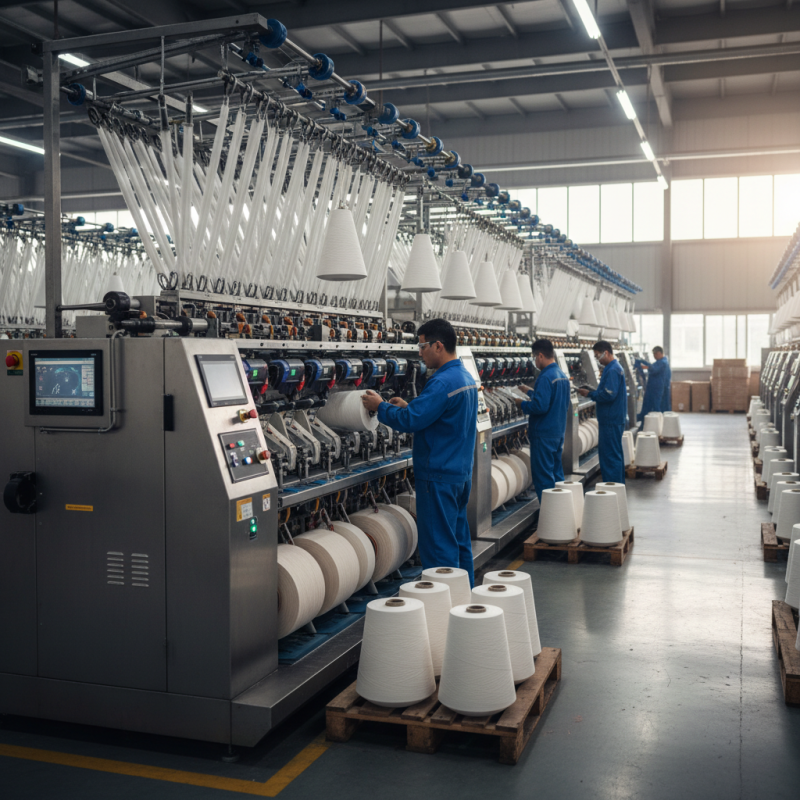
What Is a Spinning Frame Machine?
A spinning frame machine is essential in the textile industry. It transforms fiber into yarn. This process is vital for producing fabrics used in various applications. The machine plays a crucial role in creating strong, even yarn that meets quality standards.
The spinning frame machine operates by drawing out fibers and twisting them together. This twisting process strengthens the yarn. According to industry reports, modern spinning frames can produce over 6000 meters of yarn in an hour. Operators must constantly monitor settings to ensure quality. Adjustments may be needed due to fiber variations. Proper maintenance is also critical. Neglecting these aspects can lead to faulty yarn and production delays.
Despite improvements, issues persist. Spinning frames can experience frequent breakdowns without preventive upkeep. Reports indicate that around 10% of production time is lost to machine maintenance. Workers must be trained to identify problems early. Efficiency relies on their ability to troubleshoot effectively. Thus, while spinning frame machines enhance production, they also highlight the need for ongoing oversight and skill development.
Historical Development of Spinning Frame Technology
The spinning frame machine has a rich history that traces back to the early industrial revolution. These machines significantly improved the process of spinning cotton and other fibers. Before their invention, spinning was done by hand, which limited productivity. The spinning frame mechanized this task, allowing for smoother and more efficient yarn production.
In the late 18th century, inventors began to explore the use of machines to enhance textile manufacturing. The spinning frame used multiple spindles to spin several threads simultaneously. This was a game-changer for the textile industry. Factories could produce large quantities of yarn at a fraction of the time and cost. However, this shift did not come without challenges. Labor conditions were often poor, and the reliance on machines caused significant job loss for skilled artisans.
Tip: When exploring historical technologies, consider both their innovations and their societal impact. Reflect on how progress can lead to both advance and struggle.
The spinning frame evolved over time. New designs and improvements, like the water frame, contributed to its effectiveness. Still, the machine had limitations. Maintenance was crucial to ensure consistent output. Some operators faced steep learning curves, leading to frustrations. Despite these issues, the spinning frame remained a vital piece of machinery in textile manufacturing.
Tip: Embrace imperfection in learning about history. Understanding limitations helps to appreciate advancements even more.
Key Components of Spinning Frame Machines
Spinning frame machines are essential in textile manufacturing. They transform raw fibers into yarn through a fascinating set of key components. One crucial component is the drafting system. This system processes the fiber in a series of rollers, stretching and aligning it. According to a report from the International Textile Manufacturers Federation, drafting accounts for nearly 30% of the final yarn quality.
The heart of the spinning frame is the spindle. Each spindle spins the fiber into yarn at varying speeds. Some reports indicate that a spinning frame can operate at speeds over 25,000 RPM. This high-speed operation increases productivity but poses challenges in maintaining quality and consistency. Spindle quality is vital; even slight misalignments can lead to defects in the yarn.
Another component is the bobbin mechanism. This part of the machine collects the spun yarn. However, bobbin transfer can be a point of error. Improper winding can cause breakage during further processing. Some studies show that up to 15% of operational issues in spinning can trace back to the bobbin system. Understanding these components is crucial for optimizing spinning frame performance in textile production.
Operating Principles of Spinning Frame Machines
Spinning frame machines play a crucial role in textile manufacturing. They convert raw fibers into yarn through a systematic process. The operating principles of these machines ensure efficiency and quality. At their core, spinning frames use a series of rollers and spindles. These components twist and draw out fibers simultaneously.
The first stage involves fiber feeding. Fibers are fed into the machine, where they are drawn and elongated. This is a delicate process. The right tension is crucial; too much tension can break fibers. Reports indicate that this operation can achieve a production rate exceeding 200 kg per hour under optimal conditions.
As fibers progress, they pass through several roller pairs. Each pair twists the fiber further, creating a continuous yarn strand. The winding mechanism collects the finished yarn. This part of the process is often a bottleneck. It's easy for issues like tangling to arise. Efficiency can drop dramatically if not monitored closely. A recent study highlighted that 15% of spinning frame downtime is due to winding problems. This area often warrants further investigation for improvements.
Impact of Spinning Frame on Textile Production Efficiency
The spinning frame machine has revolutionized textile production. By automating the spinning process, it drastically improved efficiency. The speed of production can reach up to 10,000 RPM, significantly increasing yarn output. Reports indicate that factories utilizing spinning frames can produce yarns at a rate that is 30% faster than traditional methods.
However, this progress comes with challenges. Many operators struggle to manage the complexity of modern spinning frames. Technical issues can lead to downtime. A recent industry study showed that up to 15% of spinning frame time may be lost to maintenance and repairs. This inefficiency is a growing concern for manufacturers aiming for a lean operation.
Moreover, the initial investment in spinning frames can be high. Smaller producers may find it difficult to compete. They often lack the capital to adopt such advanced machinery. Consequently, this can create an uneven playing field in the textile market. As companies strive to balance technology and human skill, the impact of spinning frames on efficiency remains a mixed bag. The pursuit of perfection in production continues, but it's not without its own imperfections.