How to Choose the Best Italian Fabric for Your Fashion Needs?
Choosing the best Italian fabric for your fashion needs is vital for achieving exceptional quality and style. Italy has long been synonymous with luxury textiles. Reports indicate that the Italian textile market accounts for over 30% of Europe’s fabric exports. This figure highlights the global influence of Italian fabric in fashion.
When selecting fabric, consider the variety available. Italian fabrics range from elegant silk to robust wool. These materials offer both durability and aesthetics. Renowned designers often choose Italian fabric for its superior craftsmanship. However, not all Italian fabrics are created equal. Understanding the differences can elevate your design.
Quality comes with a price. While some may find top-tier fabrics expensive, they often last longer and resist wear. Opting for Italian fabric can sometimes seem overwhelming. Take your time to research and reflect on your choices before making a decision. This ensures your investment aligns with your fashion vision.
Understanding Different Types of Italian Fabrics Available in the Market
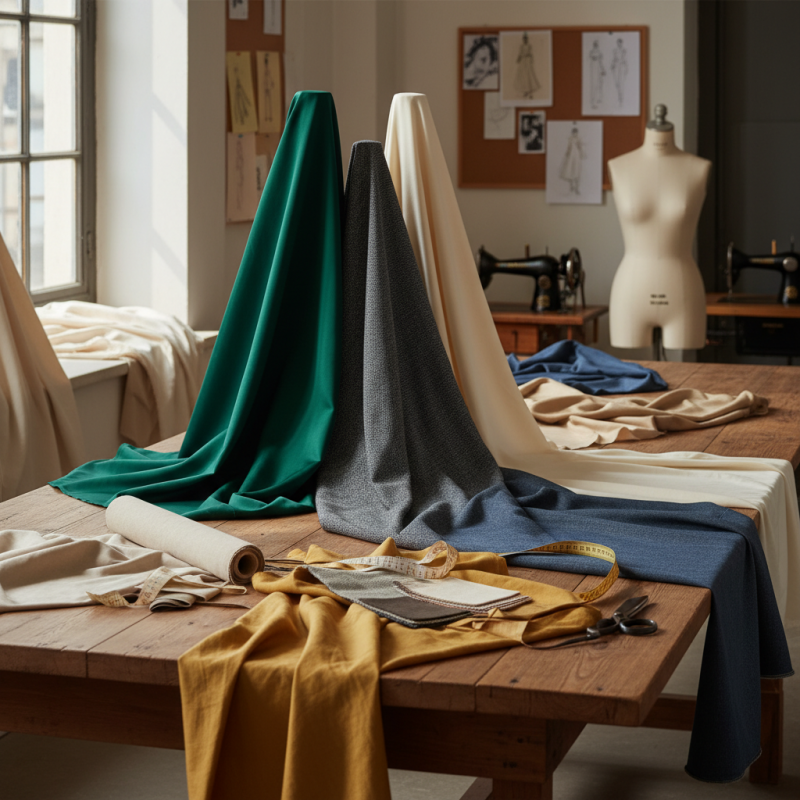
Italian fabrics offer a rich tapestry of choices for fashion enthusiasts. From luxurious silk to durable denim, each type has unique qualities. Wool, for example, provides warmth and structure, perfect for tailored garments. Cottons are versatile and breathable, ideal for casual wear in warmer climates.
Many designers appreciate the craftsmanship behind these materials. However, sourcing authentic Italian fabrics can be challenging. Not all fabrics labeled as “Italian” meet high standards. It's crucial to verify the origin and quality. Sometimes, even reputable suppliers may carry misleading labels.
Textiles such as chiffon and tulle add elegance to eveningwear but may require special care. Innovative blends are gaining popularity, offering the best of multiple fibers. Still, blending can sometimes compromise the essence of traditional fabrics. Understanding these nuances will help you make better choices. Choose wisely to enhance your fashion creations.
Identifying Your Fashion Needs and Preferences for Fabric Selection
When selecting Italian fabrics for fashion, your needs and preferences are paramount. Understanding the type of garment you want to create can guide you in choosing the right material. For instance, cotton blends are perfect for casual wear, while luxurious silks work well for evening attire. According to industry reports, about 70% of designers prioritize fabric utility in their collections. This underlines the importance of aligning your fabric choice with the intended use.
Consider the texture, weight, and drape of the fabric. Fabrics like linen and twill are breathable and ideal for summer collections. Meanwhile, wool and cashmere offer warmth for winter apparel. Reports have shown that 40% of consumers prefer sustainability. Choosing materials that align with eco-conscious values is becoming increasingly important.
Tips for making informed choices: First, always request samples. Touching the fabric helps assess quality. Second, check the fabric's durability by reading reviews. Lastly, don't shy away from asking for expert opinions from textile professionals. Understanding your fashion needs can sometimes mean trial and error. It’s about discovering what truly resonates with your vision and personal style.
Evaluating the Quality and Durability of Italian Fabrics
When evaluating the quality and durability of Italian fabrics, it's essential to focus on specific characteristics. Italian fabrics are renowned for their rich textures, vibrant colors, and craftsmanship. According to the AITF (Italian Textile and Fashion Association), over 80% of Italian fabrics meet strict quality standards, ensuring longevity and durability in fashion applications.
The weave type plays a crucial role in durability. For instance, tightly woven fabrics often resist wear and tear better than loosely woven ones. Additionally, tensile strength is a key aspect. Italian silk, for instance, can have a tensile strength ranging from 20-25 MPa. This indicates its ability to withstand stress while maintaining its beauty over time.
However, not all Italian fabrics are perfect. Some wool blends might pill after frequent use. Research shows that fabrics with higher natural fiber content often have better longevity than synthetic blends, yet they may require more care. It's vital to balance aesthetic appeal with practical considerations in your fabric choice. The goal is to find a resilient fabric that also aligns with your fashion vision.
How to Choose the Best Italian Fabric for Your Fashion Needs?
| Fabric Type |
Composition |
Weight (g/m²) |
Durability (1-10) |
Breathability (1-10) |
Typical Use |
| Silk |
100% Silk |
80 |
7 |
8 |
Evening Wear |
| Cotton |
100% Cotton |
150 |
8 |
9 |
Casual Wear |
| Wool |
100% Wool |
250 |
9 |
7 |
Winter Wear |
| Linen |
100% Linen |
180 |
7 |
10 |
Summer Wear |
| Polyester |
100% Polyester |
120 |
6 |
6 |
Activewear |
Considering Fabric Weight and Texture for Your Fashion Projects
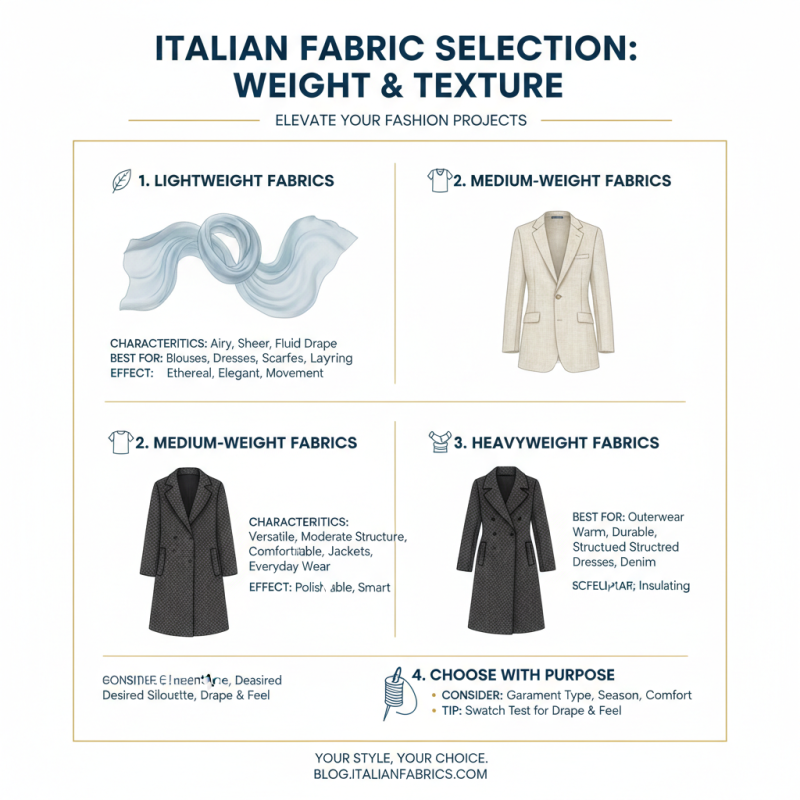
Selecting the right Italian fabric can significantly impact your fashion projects. Focus on fabric weight and texture to elevate your designs. Lightweight fabrics, like chiffon, flow beautifully and create ethereal looks. Heavier options, such as wool or denim, provide structure and warmth. Choose based on the intended use of your garment.
Pay attention to texture. A smooth silk creates elegance, while a textured linen brings a casual vibe. Consider how the fabric feels against the skin. Comfort is essential. Fabrics can vary widely in texture, so sampling before purchase is wise.
**Tips:** Always consult swatches when possible. They provide real insight into the fabric's true color and feel. Test different weights to see how they drape. The right choice can make or break your design. Expect some trial and error; refining your fabric choices will enhance your skills.
Exploring Sustainable and Eco-Friendly Italian Fabric Options
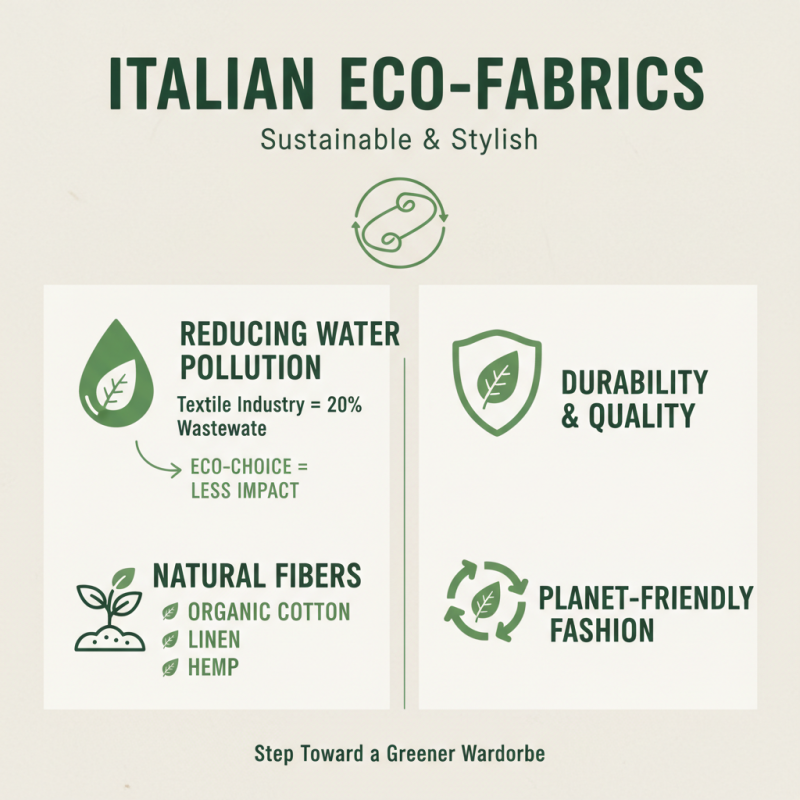
Choosing sustainable and eco-friendly Italian fabrics marks a pivotal step in fashion. The global textile industry accounts for around 20% of wastewater, and opting for eco-conscious materials can significantly reduce this impact. Italian fabrics often feature natural fibers like organic cotton and linen, offering durability while minimizing environmental harm.
Recent reports indicate that the demand for sustainable fabrics rose by 20% in the last three years. Many consumers now prioritize eco-friendly options in their fashion choices. Fabrics made from recycled materials contribute to less waste and lower carbon emissions, appealing to environmentally aware shoppers. However, not all manufacturers embrace transparency. But, being discerning can lead to valuable choices.
Exploring the realm of sustainable Italian fabrics can feel overwhelming. The sheer variety of options may confuse. Some fabrics tout sustainability, yet lack certification. Look for trusted certifications, like Global Organic Textile Standard (GOTS). Such labels assure higher standards. The intricate weaving and dyeing techniques in Italy often have low environmental footprints. Yet, the journey to sustainability requires continuous learning and reflection, recognizing that no fabric is entirely flawless.