China Top Long Sleeve Manufacturers for Global Buyers
China has become a major sourcing base for Long Sleeve garments, serving brands, wholesalers, and private-label buyers worldwide. Its manufacturers cover cotton basics, thermal layers, performance shirts, workwear, and fashion-led designs. Yet factory capacity alone does not guarantee dependable results. A polished catalog can hide inconsistent sizing, weak stitching, or unstable fabric quality.
Textile manufacturing expert Dr. Subhash K. Batra emphasizes a valuable principle: “Quality is built into the process, not added through inspection.” This idea matters when evaluating Chinese Long Sleeve suppliers. Buyers should examine fabric composition, GSM, colorfastness, shrinkage, seam strength, and production controls. A sample should be washed, measured, and worn before bulk approval. Small details matter. A loose cuff can damage customer trust.
Reliable manufacturers usually provide clear specifications, realistic lead times, sample records, and traceable quality checks. They should also explain their experience with export documentation, packaging requirements, and recognized product safety standards. Factory audits can reveal useful evidence, including cutting-room organization, needle control, inspection stations, and storage conditions.
No ranking is perfect. A supplier that suits a premium cotton collection may perform poorly on technical sportswear. Price comparisons can also mislead when fabric weight, finishing, packaging, and inspection services differ. Global buyers need practical evidence, not attractive promises. This guide examines China’s top Long Sleeve manufacturers through product capability, customization, communication, quality assurance, and export reliability. Some conclusions may change as factories upgrade equipment or markets shift. That uncertainty deserves attention.
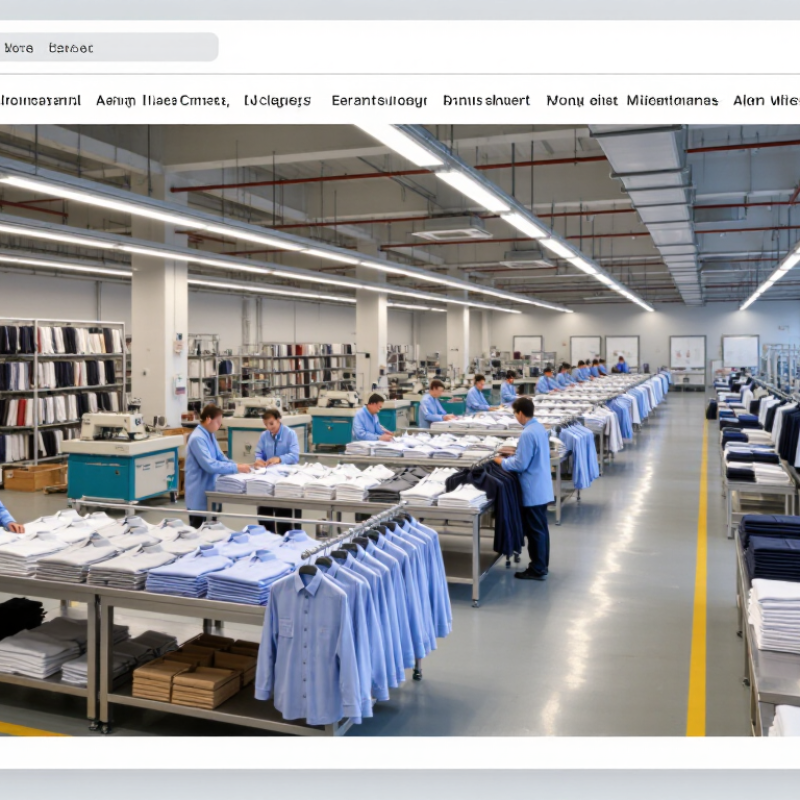
Types of Long Sleeve Manufacturers in China
China’s long-sleeve supply base is not one category. Factory types differ in equipment, order size, and production control. China Customs data reported textile and apparel exports of about US$293.6 billion in 2023. The WTO World Trade Statistical Review 2024 also identified China as the world’s largest clothing exporter. Scale matters.
Full-package OEM factories handle sampling, fabric sourcing, sewing, finishing, and packing.
ODM suppliers offer ready-developed patterns that buyers can adjust.
Specialized knit factories focus on ribbed cuffs, stretch jerseys, thermal layers, or seamless construction.
Vertically integrated manufacturers produce yarn, fabric, and garments under one system.
Smaller flexible factories accept lower volumes, but their documentation may be thinner. That distinction is easy to miss.
A buyer should match the factory type with product complexity and forecast volume.
Ask for machine lists, fabric test reports, production capacity, and recent audit records. For viscose or cotton styles, verify shrinkage, colorfastness, and fiber composition before approving bulk production. The 2024 ITMF Global Textile Industry Survey reported continuing pressure on textile orders and investment, so capacity claims deserve careful checking.
I would not treat the lowest quotation as proof of efficiency. It may reflect weaker testing, slower communication, or excluded finishing costs. Some sourcing plans still fail because buyers audit the sample, not the process.
Key Manufacturing Regions and Production Capabilities
China Top Long Sleeve Manufacturers for Global Buyers
China’s long sleeve manufacturing base is divided among several specialized regions. Zhejiang is known for knitted tops, cotton jersey, rib fabrics, and flexible small-batch production. Jiangsu often supports refined cut-and-sew work, fabric development, and stable export-oriented quality systems. Guangdong offers broad capacity for casualwear, functional layers, and fast sample adjustments. Fujian is strong in sports-inspired garments, technical fabrics, and integrated sewing lines.
Capabilities vary inside each region. A capable factory should explain yarn counts, fabric weight, shrinkage control, seam strength, and colorfastness testing. For larger orders, automated cutting, multi-needle machines, inline inspection, and packing controls improve consistency. Experienced buyers should request a measurement chart, pre-production sample, inspection plan, and realistic lead time. These documents reveal more than a polished showroom.
Regional reputation helps, but it cannot replace factory verification. Some suppliers excel at prototypes yet struggle with repeated bulk orders. Others offer impressive capacity but lack careful communication during revisions. I have found that clear tech packs and staged approvals reduce avoidable corrections. Still, this process is not perfect. Material substitutions, uneven operator training, or rushed seasonal schedules can affect results. Global buyers should compare regional strengths with actual equipment, workforce experience, testing records, and after-sales responsiveness.
China Top Long Sleeve Manufacturers for Global Buyers - Key Manufacturing Regions and Production Capabilities
Regional sourcing guide for long-sleeve T-shirts, base layers, sweatshirts, knit tops, polo shirts, and performance apparel. The comparison focuses on established textile and apparel clusters rather than individual companies or brands.
| Manufacturing Region | Relevant Textile & Apparel Cluster | Long-Sleeve Product Strengths | Core Material Capabilities | Typical Manufacturing Services | Export & Logistics Advantages | Best Fit for Global Buyers |
|---|---|---|---|---|---|---|
| Zhejiang | Shaoxing, Keqiao; Ningbo; Jiaxing | Basic T-shirts Fashion knitwear Seamless styles Activewear | Cotton jersey, polyester, recycled polyester, elastane blends, viscose, modal, rib knit, interlock, fleece, and printed fabrics. | Fabric development, dyeing, printing, knitting, cut-and-sew production, embroidery, heat transfer, garment washing, and packaging. | Strong textile-material supply chain; convenient access to Ningbo-Zhoushan Port and major East China logistics networks. | Retail collections requiring many fabric choices, color variations, private labels, and medium-to-large production runs. |
| Jiangsu | Suzhou, Wujiang, Nantong, Changzhou | Premium basics Thermal layers Sports tops Fine-gauge knits | Combed cotton, cotton-modal, viscose, polyester, nylon, wool blends, technical stretch fabrics, brushed fleece, and functional jersey. | High-quality knitting, fabric finishing, garment dyeing, softening, anti-pilling treatments, performance finishing, and detailed quality control. | Well-developed Yangtze River Delta transport system with access to Shanghai and other regional container ports. | Brands and importers prioritizing hand feel, fabric consistency, technical finishes, and repeat-order stability. |
| Guangdong | Guangzhou, Dongguan, Zhongshan, Shantou | Fashion tops Streetwear Sportswear Small-batch development | Cotton jersey, polyester blends, nylon, elastane fabrics, French terry, fleece, mesh, pique, and specialty fashion knits. | Pattern development, sampling, cut-and-sew, garment washing, screen printing, digital printing, embroidery, appliqué, and rapid style adaptation. | Access to major South China ports, including Shenzhen and Guangzhou, plus mature air-freight and supplier networks. | Fast-moving fashion programs, trend-led collections, frequent style updates, and buyers needing flexible product development. |
| Fujian | Quanzhou, Jinjiang, Shishi, Xiamen | Performance tops Training wear Fleece Team apparel | Polyester, recycled polyester, nylon, elastane, moisture-management jersey, mesh, interlock, brushed fleece, and bonded fabrics. | Sportswear construction, flatlock sewing, reflective details, sublimation printing, heat transfer, bonding, functional finishing, and bulk production. | Established apparel export base with access to Xiamen and other Southeast China shipping routes. | Sports, outdoor, school, promotional, and workwear buyers requiring durable construction and functional fabric options. |
| Shandong | Qingdao, Weifang, Zibo, Jinan | Cotton basics Workwear layers Sweatshirts Large-volume programs | Cotton, cotton-polyester blends, recycled fibers, fleece, French terry, rib, woven cotton, and durable blended fabrics. | Spinning, knitting, dyeing, cut-and-sew, garment finishing, embroidery, printing, packing, and standardized bulk production. | Qingdao provides an important North China maritime gateway; the region also benefits from integrated cotton and textile resources. | Volume-oriented buyers seeking dependable cotton programs, practical long-sleeve uniforms, and cost-controlled production. |
| Hubei | Wuhan, Xianning, Jingzhou, Huangshi | Cotton jersey Casual basics Underlayers Mid-volume orders | Cotton, cotton-modal, polyester-cotton, viscose blends, rib knit, jersey, interlock, and lightweight fleece. | Knitting, dyeing, garment assembly, embroidery, printing, finishing, inspection, and coordinated inland production. | Central China location supports domestic distribution and multimodal transport to coastal export ports. | Buyers balancing production cost, stable basic styles, and moderate order volumes rather than highly fashion-sensitive programs. |
| Henan | Zhengzhou, Xinxiang, Anyang, Zhoukou | Cotton garments Thermal wear Uniform basics Cost-sensitive programs | Cotton, cotton-polyester, viscose, polyester, rib, jersey, thermal knit, fleece, and blended yarn fabrics. | Spinning, knitting, dyeing, cut-and-sew, embroidery, printing, garment finishing, and standardized inspection procedures. | Central and North China road-rail connections support inland manufacturing and onward shipment through coastal ports. | Large-volume basic apparel, thermal long-sleeve garments, uniforms, and price-sensitive sourcing programs. |
How to Evaluate Chinese Long Sleeve Suppliers
Choosing a Chinese long sleeve manufacturer requires more than comparing unit prices. Start by checking factory experience, production capacity, and communication speed. Ask for product photos, stitching details, and recent sample records. A reliable supplier should explain fabric composition, weight, shrinkage, and colorfastness clearly. Vague answers are warning signs.
Request a sample before discussing large orders. Examine sleeve symmetry, cuff recovery, seam strength, and loose threads. Wash the sample according to its care label. Measure it again after drying. For example, a 180 GSM cotton shirt may feel light, while a 240 GSM fabric offers more structure. However, weight alone does not prove quality. I have seen heavier fabric perform poorly because of weak stitching. That detail is easy to miss.
Tips: Confirm the MOQ, sample fee, lead time, and payment schedule in writing. Ask whether the factory handles cutting, sewing, printing, and packing internally. A video call can reveal workspace conditions, but it is not a full audit. Consider an independent inspection before shipment. Keep a written specification sheet with measurements and tolerances. Also, test communication with a small order. It may feel slower, but it exposes problems early. Some suppliers answer quickly yet miss small instructions. That happened in my own evaluation, so response speed should never be your only measure.
Quality Standards, Customization, and Compliance
China Top Long Sleeve Manufacturers for Global Buyers
Quality Standards, Customization, and Compliance
For global buyers, leading Chinese long sleeve manufacturers are evaluated through evidence, not attractive catalogs. Quality begins with stable fabric specifications, including fiber content, GSM, stretch recovery, and shrinkage limits. Experienced production teams test colorfastness after washing and check seam strength before bulk cutting. Small samples reveal practical problems. A sleeve may twist after laundering, even when the fabric looks excellent.
Customization should be documented in a technical sheet. Buyers can define measurements, cuff width, neckline shape, thread color, labels, packaging, and folding methods. A capable manufacturer confirms tolerances before production and prepares a pre-production sample. This step prevents expensive corrections later. However, customization can create overlooked risks. A softer finish may reduce durability, while a tighter cuff may affect comfort. Clear communication matters more than impressive promises.
Compliance requires destination-specific verification. Manufacturers should provide current test reports for restricted substances, color migration, flammability, and children’s product requirements when applicable. Buyers should also review factory audits, material traceability, social responsibility records, and quality inspection procedures. Documents must match the actual fabric and production batch. An outdated report is not reliable evidence. Independent testing can add cost, but it may expose issues before shipment. No factory is perfect; responsible buyers examine weaknesses, record corrective actions, and confirm improvements through follow-up inspections.
Ordering, Pricing, and Global Shipping Considerations
China Top Long Sleeve Manufacturers for Global Buyers
Ordering long sleeve garments from China requires more than comparing unit prices. Request fabric composition, size charts, color standards, sample photos, and production timelines in writing. A reliable manufacturer should explain minimum order quantities, sample fees, payment stages, and quality inspection points. Ask whether prices include packaging, labels, and export documentation. Compare quotations under the same shipping terms. Otherwise, a cheaper offer may hide important costs.
Tips: Begin with a small trial order. Check sleeve length, stitching, shrinkage, and color consistency after washing. Keep one approved sample for comparison. Forecasts are never perfect. A flexible supplier can help when demand changes, but flexibility may increase the unit cost.
Global shipping also needs careful planning. Confirm whether the quotation uses EXW, FOB, CIF, or another agreed term. Clarify who handles inland transport, freight booking, insurance, customs documents, and destination charges. Air freight suits urgent, lightweight orders, while sea freight usually fits larger cartons. Measure carton dimensions before booking; volume can affect freight more than garment weight. Allow extra time for inspections, port congestion, and seasonal delays. A practical lesson is simple: even an accurate factory schedule can fail without a realistic shipping buffer. Suppliers should provide consistent commercial invoices, packing lists, and traceable order records. Check every detail before production starts.